
The First Stone
How to begin a gemstone collection with intention, knowledge, and lasting value.
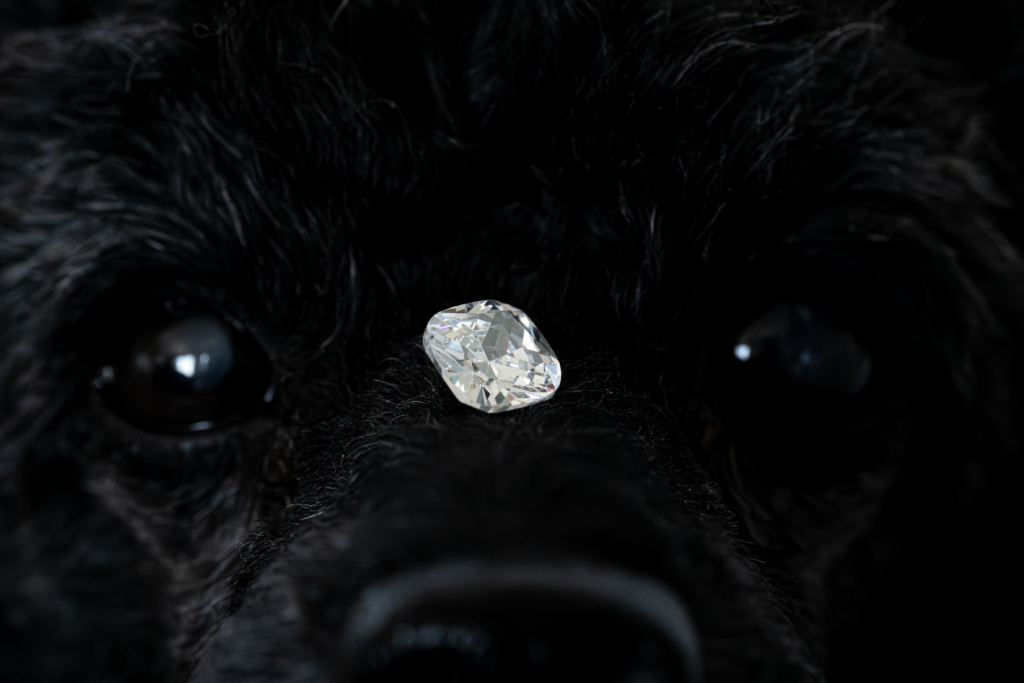
I still remember the first gemstone I bought for myself. Not for a client. Not for a design brief. Just for me. It wasn’t large or rare by market standards, but it stayed on my desk for weeks. I watched it in different light, turned it between my fingers, and learned how its color softened in the evening. My secret pleasure was to take it, look at it with my loupe, to enjoy it. That quiet time taught me something important: a gemstone collection doesn’t start with acquisition. It starts with attention.
If you’re wondering how to start a gemstone collection, forget the idea of building something impressive. Think instead about building something personal. The most meaningful collections don’t begin with quantity or status — they begin with one stone that makes you pause and feel the beauty.
When people ask me what gemstones to buy first, I always return to the same principle: buy stones you want to live with. Stones that you want to look at over and over again. Stones that invite you back. Not the ones that trend on social media or promise fast appreciation. Those come later, if they come at all.
Choosing the right gemstones: color before everything
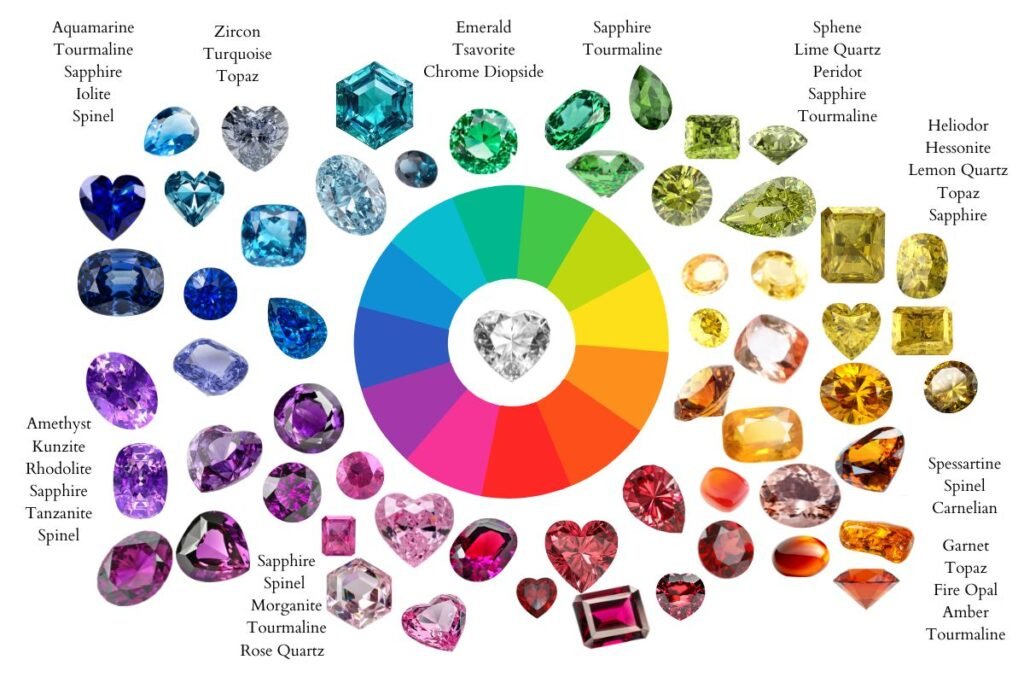
Color is the first real decision in any gemstone collection. Before carat weight, before origin, before certificates. Color is what your body responds to instinctively. Some collectors are drawn to cool palettes — mineral blues, sea-glass greens, quiet lavenders. Others gravitate toward warmth: amber tones, wine reds, desert golds. There is no hierarchy here. Only resonance.
For beginners, I often recommend gemstones that reward observation rather than spectacle. Spinel, zircon, tourmaline, sapphire in its softer expressions. These stones don’t reveal themselves all at once. They change with light, angle, and distance. Over time, they train your eye — and that education is more valuable than any single purchase.
Clarity & Cut
Clarity deserves nuance. A flawless gemstone can feel distant, too perfect, almost fake. A lightly included one can feel human. Inclusions aren’t flaws by default; they’re records of formation. What matters is whether they disrupt the stone’s presence or deepen it. This is something you can’t learn from grading alone. You learn it by looking. Slowly. Imperfectly perfect. The beauty is in the small defects.
Cut is where many early collections lose coherence. Precision is not the same as harmony. A good cut allows color to breathe and light to move naturally. It doesn’t chase brilliance at the expense of character. When choosing stones for a collection — especially loose gemstones — look for balance. Calm geometry. Cuts that feel stable in the hand.
Where to buy gemstones — and why guidance matters
Knowing where to buy gemstones is as important as knowing what to buy. Dealers, fairs, private sources, online platforms — all can be excellent or problematic depending on transparency and expertise. Documentation matters, but trust matters more. If a stone’s story feels rehearsed, step back.
This is where many collectors choose to work with a bespoke gemstone service. Not to be sold to, but to be guided. Our role is often to slow the process down — to source stones quietly, compare them side by side, explain differences that aren’t obvious in photos. Sometimes the right decision is to wait. Sometimes it’s to walk away.
A thoughtful gemstone collection is built through restraint as much as desire. Anyone can buy a stone. Fewer people know when not to.
Loose stones or jewelry? Deciding what comes next
One of the most common questions I hear is whether gemstones should remain loose or be set into jewelry. There is no correct answer. Loose stones invite contemplation. They’re studied, handled, and returned to their place. Jewelry, on the other hand, brings gemstones into daily life. It gives them movement, warmth, and context.
For new collectors, I usually suggest starting with mostly loose gemstones and, at most, one piece of jewelry. That single piece becomes an emotional anchor — a marker of time or intention. The rest of the stones can remain open-ended, waiting until their form becomes clear.
When I design jewelry from a collected stone, I rarely do it immediately. I live with the gem first. I watch how it behaves. Some stones want intimacy — a ring worn close to the hand. Others prefer distance — a pendant that moves with breath, or earrings that catch fragments of light. Stones are patient. They don’t rush you.
Building a gemstone collection that lasts
Over time, patterns begin to appear. You’ll notice recurring colors, sizes, moods. That’s when a gemstone collection stops being accidental and starts becoming coherent. It becomes a visual diary. A language only you speak.
Some people collect gemstones for investment. Some for design. Some for the pleasure of understanding the earth more closely. All of these motivations are valid. What matters is honesty. A collection built on clarity — of intention and of eye — will always feel complete, even when it’s small.
The first stone teaches you how to look.
The rest simply follow.