Collecting Watches Like Jewellery
Why I choose them slowly and with intention.
I didn’t start collecting watches because I wanted to become a collector. I started because certain watches stayed with me longer than they should have. I would think about them days later. I would remember how they felt on my wrist — not the weight, but the presence. That quiet sense that something belonged there.
That’s how real jewellery enters your life. And watches, when treated properly, are one of the highest forms of it.
What draws me to watches is the same thing that draws me to exceptional jewellery: the concentration of art, skill, and decision-making in a very small space. Except with watches there is an added tension — the problem to solve. How to fit increasing levels of precision, complication, and mechanical intelligence into ever-smaller cases. How to make something complex feel effortless.
I approach watches the way I approach gemstones — with curiosity, discipline, and a strong instinct to refuse. I say no far more often than yes. Watches that interest me aren’t just beautiful; they are difficult. Difficult to design, difficult to execute, difficult to perfect. That difficulty is visible if you know how to look.
That’s why I started collecting watches as jewellery. They are fascinating to wear because they carry so much human effort inside them — art and engineering held together by restraint. And that’s how a collection gains character, not through volume, but through selection.
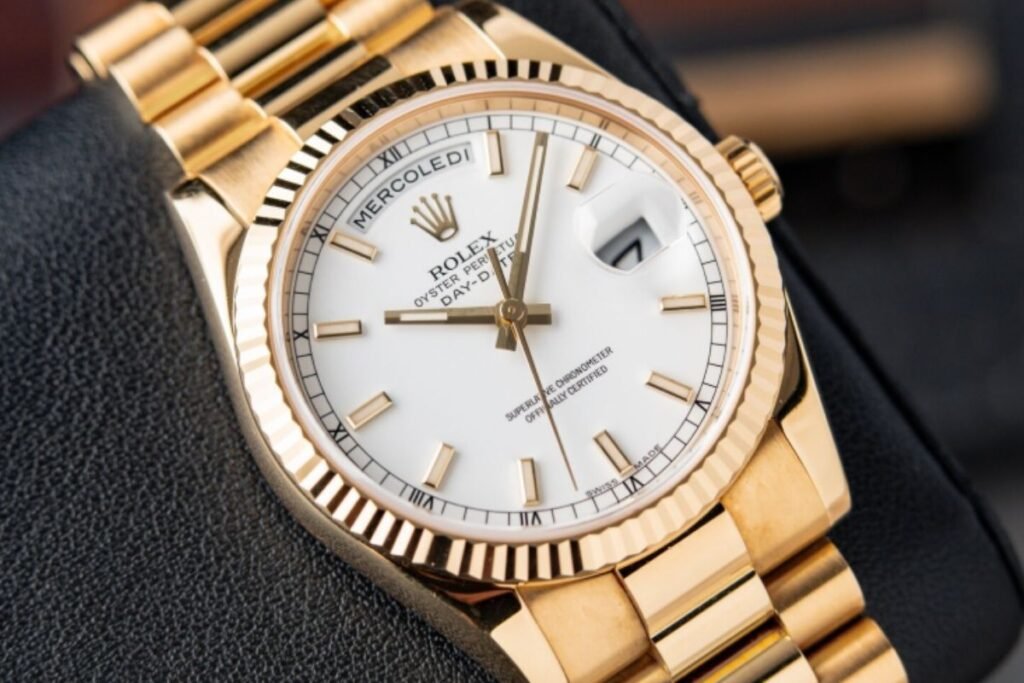
I collect a human response to art and craftmanship
Most people misunderstand collecting. They think it’s about owning more. It isn’t. At its core, collecting is a human response to beauty, order, and meaning. We gather objects not to possess them, but to create continuity — to mark growth, memory, and identity over time.
A real collection evolves as you do. You don’t add pieces to fill spaces or complete sets. You add them when something in you has shifted, when a new sensitivity has formed. The object becomes a mirror of that moment. That’s why indiscriminate accumulation never lasts — it has no inner reference point.
When I buy a watch, I already know how it will live with me. I know when I’ll wear it, what part of my life it belongs to, and why it deserves a place. If I can’t answer those questions clearly, I don’t buy it — no matter how celebrated, rare, or “important” it may be.
This discipline comes naturally when you work with jewellery and stones. They teach you early that beauty without intention becomes visual noise. Precision, selection, and restraint are what allow objects to retain meaning — and that’s what turns ownership into collecting.
Watches and gemstones share the same truth
When you collect gemstones, you learn very quickly that brilliance alone means nothing. A stone can be technically perfect and leave you indifferent. Another can be included, asymmetrical, even slightly irregular — and still hold you for years. What matters is how nature shaped it. The structure of imperfection. The way light is slowed, redirected, interrupted by inclusions. That trace of Mother Nature is not a flaw — it’s the reason the stone feels alive.
Watches are the opposite. They are man-made, engineered for precision, repetition, and control. And yet, when you’re truly collecting, the instinct is the same. You’re not looking for perfection in the abstract — you’re looking for the one that speaks to you. A specific complication. A dial that feels resolved. A rare proportion between case, crown, strap. Or the quiet brilliance of fitting real mechanical complexity into a small, elegant case.
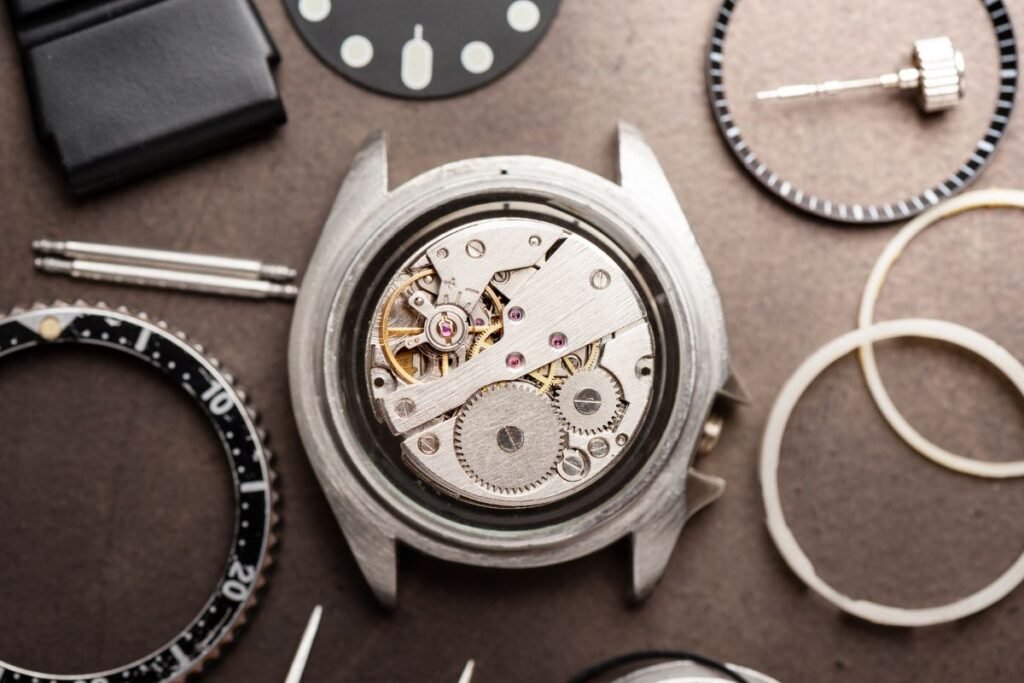
I read movements the way I read crystal structure. Not to count features, but to understand coherence. A good mechanical movement isn’t impressive because it does more. It’s impressive because it knows where to stop. Tension, release, balance. Nothing added to prove capability.
That’s why I gravitate toward watches where elegance leads. Where each complication has a reason, and restraint is part of the design. The watches that stay with me aren’t the ones that perform. They’re the ones that make careful, intelligent choices — the same way the most compelling stones do.
If you’ve never bought a watch, start with this
I always start with research. Not to memorise references, but to understand intent. I want to know why a watch exists, what the brand believes in, and whether that language aligns with mine. A watch communicates before you ever speak. If its values don’t match your personality, you’ll feel it every time you wear it. That’s why buying a watch just because it’s trending never works. Trends age faster than character.
When I try a watch on, I don’t study it immediately. I wear it. I walk. I move my hand. I pay attention to proportion — how the case sits, how the dial breathes, how the watch relates to my wrist rather than dominating it. Some watches constantly remind you they’re there. Others quietly integrate into your day. The ones that stay with me are the second kind.
A first watch doesn’t need to be complicated, but it needs to be clear in what it wants to say. Most watches are a clear statement. They speak a universal language long before anyone notices the details. Discreet or expressive. Architectural or soft. Disciplined, relaxed, curious. You don’t need to explain them — they’re read instinctively, whether we intend them to be or not.
Movement matters too, but not in an ideological way. Automatic or manual — both can be right. What I care about is coherence: that the movement suits the case, the purpose, the way the watch is meant to be worn. When those elements are aligned, the watch feels natural. When they aren’t, it always feels like effort.
That’s the difference between owning a watch and actually living with one.
What I actually look for
I always start with aesthetics. I’m drawn to a watch because something about it feels right — proportion, balance, the way the case and dial relate to each other. If that harmony isn’t there, nothing else matters. I don’t need a watch to be loud or decorative. I need it to feel resolved.
Only after that do I look at the movement and the complications. I’m interested in watches where the mechanics serve the design, not the other way around. In-house movements matter to me, especially when they’re developed with a clear purpose. Complications should be coherent, useful, or emotionally relevant — not added to inflate status.
Last comes value and intention. I want to understand what the brand stands for, what moment in its history the watch represents, and whether that philosophy is consistent over time. Watches that are designed with clarity tend to age well — aesthetically, mechanically, and often financially.
That’s how I choose. Not quickly, and never by trend.
Why I collect moon complications
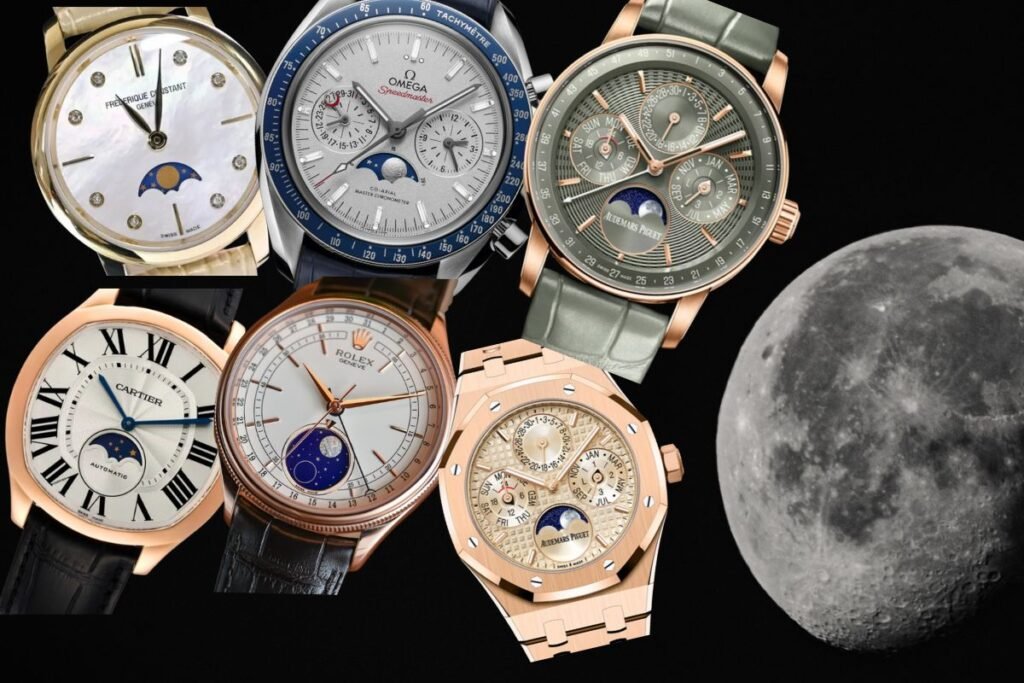
I’m drawn to moon-phase watches first for their balance. The dial always feels calmer when the moon is present — the symmetry, the negative space, the way the complication integrates rather than interrupts. If it isn’t resolved visually, I’m not interested, no matter how well executed it is.
Then comes the complication itself. I collect moon-phase watches because I use them. I live according to lunar cycles. I plan differently around a full moon, and I slow down around a new one. My energy and focus change, and I’ve learned to work with that instead of against it. In that sense, the moon on my wrist isn’t symbolic. It’s functional.
What I appreciate most is how the complication is expressed mechanically — the patience it requires, the slow movement across the dial. Watching the moon advance almost imperceptibly is grounding. It introduces a different relationship with time, one that isn’t driven by urgency or precision alone.
Many people see moon-phase watches as decorative. I don’t. To me, they’re practical in a quieter way — and how someone interprets that complication often says more about their relationship with time than about the watch itself.
A feminine way of collecting
I don’t collect randomly. I collect with structure. Over time, I’ve realised that what interests me most are themes — a complication explored across different brands, or a single manufacture understood through several references. This creates a collection inside the collection. It gives context. It gives depth.
I’m not interested in owning many watches that do the same thing. Repetition doesn’t teach you anything. Comparison does. Seeing how different houses interpret the same complication tells you far more about watchmaking than owning ten variations of the same idea.
I also don’t believe in collecting to “complete” something. That mindset pushes you to buy for the sake of finishing, not because a watch truly deserves a place. I buy when a piece adds information, perspective, or technical interest to what I already own.
A collection follows you through the years. The watches you wear become anchors to specific periods of your life — how you were thinking, working, resting, changing. Over time, they accumulate memory. They reflect different phases, different needs, different sides of your personality. Jewellery taught me early that objects can carry meaning. Watches made me understand how deeply time itself becomes part of that record.
Where this is going
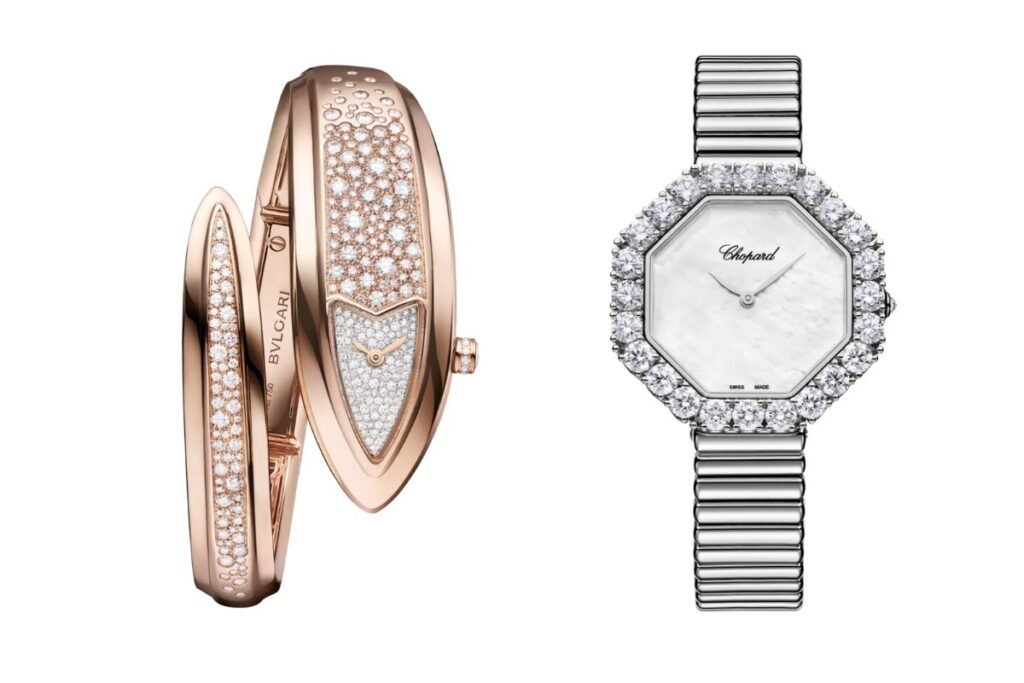
I don’t know what my collection will look like in ten years, and I’m comfortable with that. What matters to me is that every watch I add earns its place — through use, relevance, and the role it plays in my life.
Watches, like jewellery, aren’t there to decorate us. They accompany us. They measure time with precision, but they also give it weight. Inside each case is an extraordinary concentration of human intelligence — centuries of engineering refinement, compressed into a few millimeters, executed by hands trained to work at a scale most people will never see.
A good movement isn’t just accurate. It’s intentional. It reflects choices, limitations, solutions. It requires discipline, patience, and an understanding of mechanics that borders on artistry. That’s why I find it meaningful to track my days with something so carefully made. If time is passing anyway, I want to feel the effort behind the instrument that measures it.
A watch becomes a record — not only of hours and minutes, but of how we choose to live inside them. For me, that’s the true value of collecting: surrounding myself with objects that carry precision, intelligence, and craft, to remind me the hights we can reach in life.