
Zambia Emeralds: Origin, Inclusions, Value, and Why the Market Is Changing
A closer look at the emeralds of the Copperbelt and why collectors are paying increasing attention to Zambia
The Rise of Zambia Emeralds
For a long time, the emerald market revolved around one idea only: Colombian emeralds were considered the standard, and everything else existed somewhere behind them. That perception still exists today, especially among clients approaching emeralds for the first time, but the market has changed significantly over the last fifteen years.
Today, Zambia emeralds are among the most important emeralds in the world from both a gemological and commercial perspective. Serious collectors, jewelry houses, cutters, and gemstone dealers are paying close attention to the finest material coming from Zambia because the stones offer a combination that has become increasingly difficult to find elsewhere: strong saturation, relatively high transparency, larger crystal sizes, and often lower levels of treatment.
Once you begin handling high quality Zambia emeralds in person, it becomes clear very quickly that these stones are not simply alternatives to Colombian emeralds. They have their own visual identity, their own crystal structure, and their own place within the market.
The color alone immediately tells you that.

Where Zambia Emeralds Come From
Most Zambia emeralds come from the Kafubu Emerald District in the Copperbelt Province of northern Zambia, near the city of Kitwe. This region contains some of the most productive emerald deposits in the world.
The most famous operation is the Kagem mine, which today represents one of the largest emerald mines globally. Kagem has played a major role in changing international perception around Zambia emeralds because it introduced a more stable and organized supply chain into the market. Over time, this created stronger confidence among international buyers and luxury jewelry houses.
Geologically, Zambia emeralds form in schist-hosted deposits. This is very different from Colombian emeralds, which form in sedimentary-hosted deposits. That geological difference influences almost everything about the gemstone, including color, inclusions, crystal growth, and transparency.
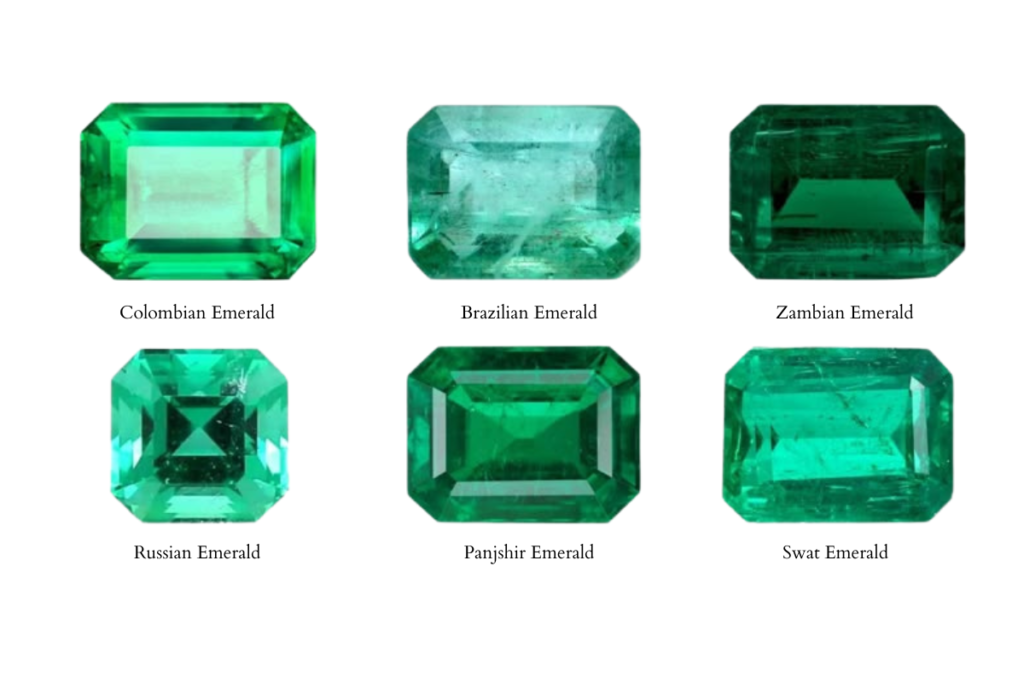
Zambia emeralds generally contain more iron than Colombian emeralds. This higher iron content contributes to the cooler tone often associated with Zambia material. Many stones display a deep green with slight blue undertones, especially in daylight.
The finest examples show a balanced bluish-green color with strong saturation and good brightness. Poorer material becomes too dark or develops a grayish appearance. This balance is extremely important when evaluating emerald quality.
The Color of Zambia Emeralds
One of the reasons collectors are becoming more interested in Zambia emeralds is color consistency.
Fine Zambia emeralds often maintain their color very well across different lighting environments. This matters more than many people realize. Some emeralds look attractive under showroom lighting but lose life in natural light or indoor conditions. High quality Zambia emeralds tend to hold their structure and saturation more consistently.
The best stones usually fall into the following range:
- Medium to medium-dark tone
- Strong saturation
- Bluish-green to pure green color
- Good transparency
- Even distribution of color
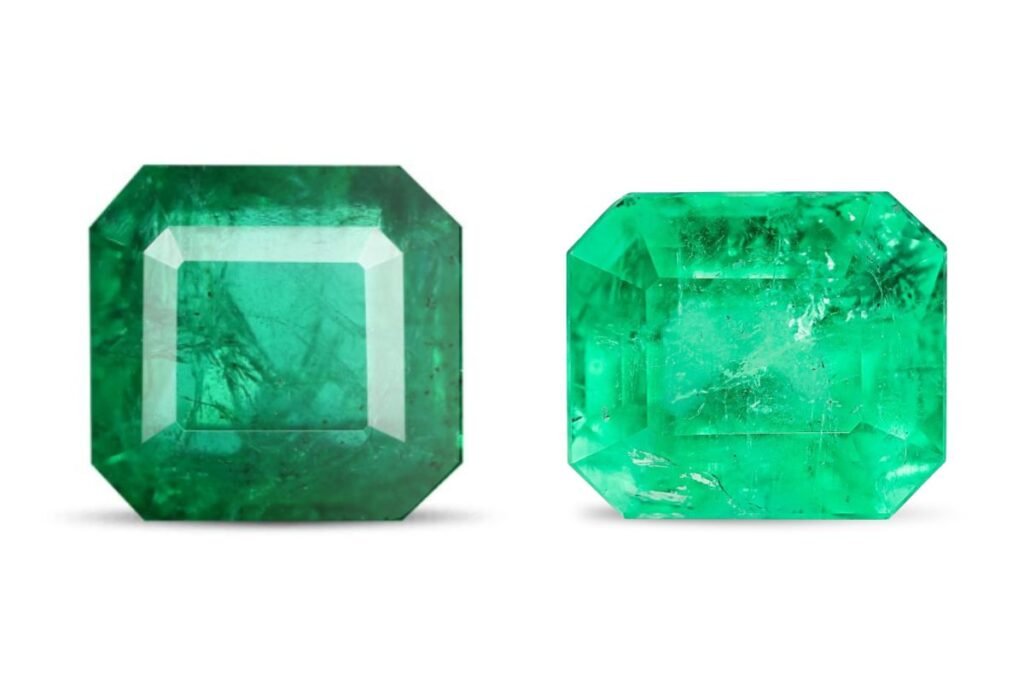
The slight blue modifier seen in many Zambia emeralds creates a more architectural and structured appearance compared to the softer green associated with Colombian material.
Some collectors strongly prefer this.
Especially in contemporary jewelry design, Zambia emeralds work exceptionally well because the color feels cleaner and more defined. In platinum and yellow gold settings, the contrast can become extremely elegant without looking overly soft or antique.
Emerald Inclusions and the Meaning of Jardin
Emerald is one of the few gemstones where inclusions are accepted as part of the identity of the stone itself.
In gemology, emerald belongs to the Type III clarity category, meaning inclusions are expected in almost every natural stone. Completely clean emeralds are extraordinarily rare.
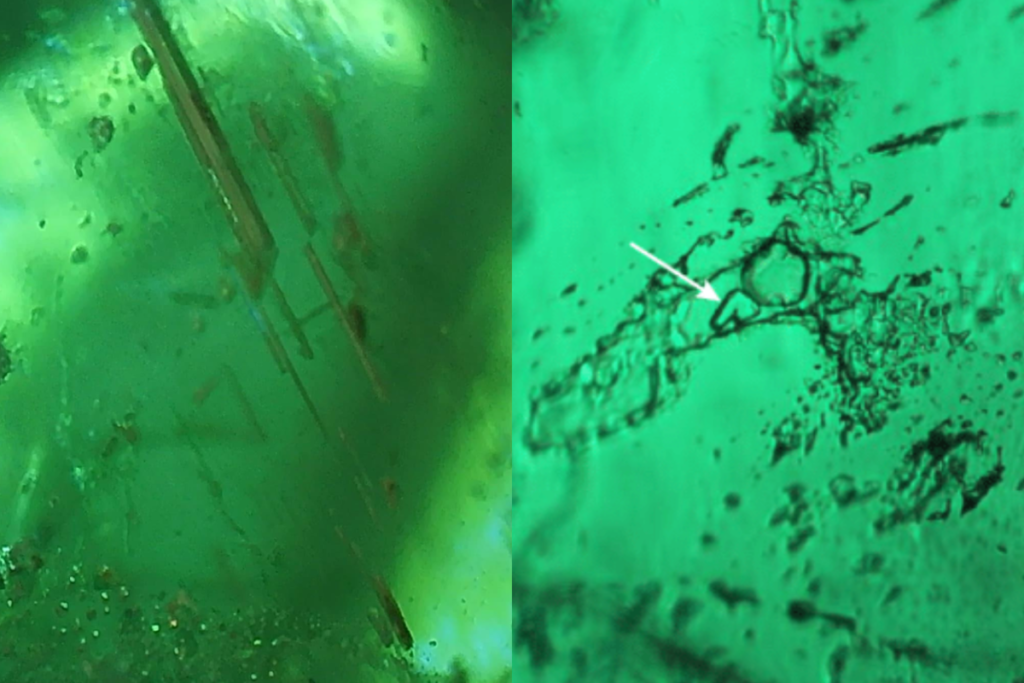
The internal characteristics of emerald are often called jardin, a French term meaning “garden.” When you look inside a natural emerald under magnification, you often see a landscape of fractures, crystals, veils, and growth structures that create depth inside the stone.
In Zambia emeralds, the most common inclusions include:
- Fingerprint inclusions
- Partially healed fissures
- Mica platelets
- Biotite crystals
- Growth tubes
- Needle-like inclusions
- Feather structures
- Liquid-filled fractures
Some stones contain dark mineral crystals suspended inside the emerald. Others display delicate intersecting veils or layered growth patterns that almost resemble silk or moss under magnification.
The most valuable inclusions are usually the ones that confirm natural origin without disrupting transparency excessively. This is an important distinction.
Collectors generally prefer emeralds where the jardin feels integrated into the crystal rather than dominant over it. Fine inclusions can add life and identity to the stone. Large white fractures crossing through the table usually reduce value because they interrupt transparency too aggressively.
A completely inclusion-free emerald can sometimes feel suspiciously artificial to experienced buyers. Emerald should retain some internal life. That is part of the stone’s identity.
Emerald Clarity and Transparency
Transparency is one of the most important value factors in Zambia emeralds.
Many commercial emeralds contain heavy inclusions that create cloudiness or excessive opacity. Fine Zambia material is appreciated because it can combine visible jardin with relatively strong transparency at the same time.
This balance is rare.
A top Zambia emerald should allow light to travel through the stone while still preserving natural internal characteristics. The stone should feel alive, not muddy or blocked.
This is also one reason Zambia emeralds perform well in larger sizes. Stones above five carats often retain stronger transparency than many collectors expect from emerald.
Emerald Cuts and Gemological Structure
The emerald cut exists for a reason.
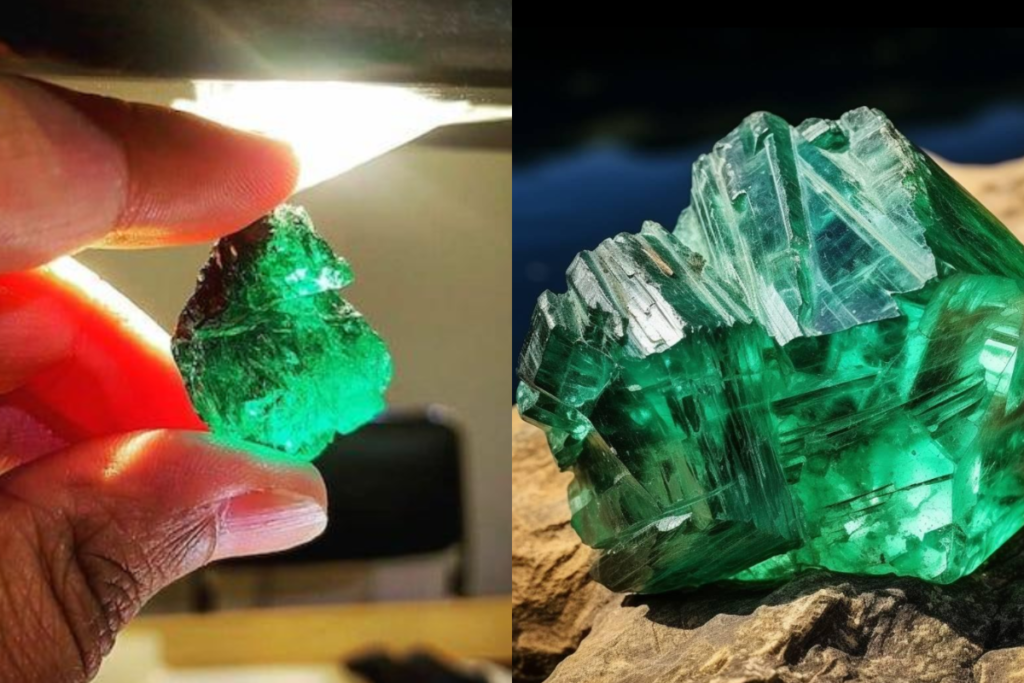
Emerald crystal is naturally brittle because of internal fractures and growth structures. Sharp corners can create pressure points during cutting or setting. The traditional emerald cut, with its step facets and truncated corners, was developed to reduce stress on the gemstone while preserving color and clarity.
Many Zambia emeralds are cut into:
- Emerald cuts
- Octagonal step cuts
- Cushions
- Oval cuts
- Pear shapes
The finest stones are usually cut to preserve color rather than maximize brilliance.
This is very important when buying emeralds.
Emerald is not a diamond. A cutter trying to force too much brilliance into the stone can easily create excessive darkness or extinction. The best emeralds work through depth, transparency, and saturation rather than sharp sparkle.
A good cut should allow the color to appear stable and even across the face of the stone.
Emerald Treatments and What Buyers Should Know
Almost all emeralds on the market receive some degree of clarity enhancement.
The most traditional treatment is cedarwood oil, used to reduce the visibility of surface-reaching fractures. Minor oil treatment is generally accepted across the fine jewelry industry. Moderate or significant treatment reduces value considerably.
When sourcing Zambia emeralds, one of the most important points is treatment level.
Today, some of the best Zambia emeralds are entering the market with minor oil only or even insignificant treatment. This is becoming increasingly attractive to collectors because heavily treated emeralds often lose long-term value potential.
A serious buyer should always request a laboratory certificate from institutions such as: Gemological Institute of America, Swiss Gemmological Institute SSEF, International Gemological Institute
The report should confirm:
- Natural origin
- Country of origin
- Treatment level
- Species and variety
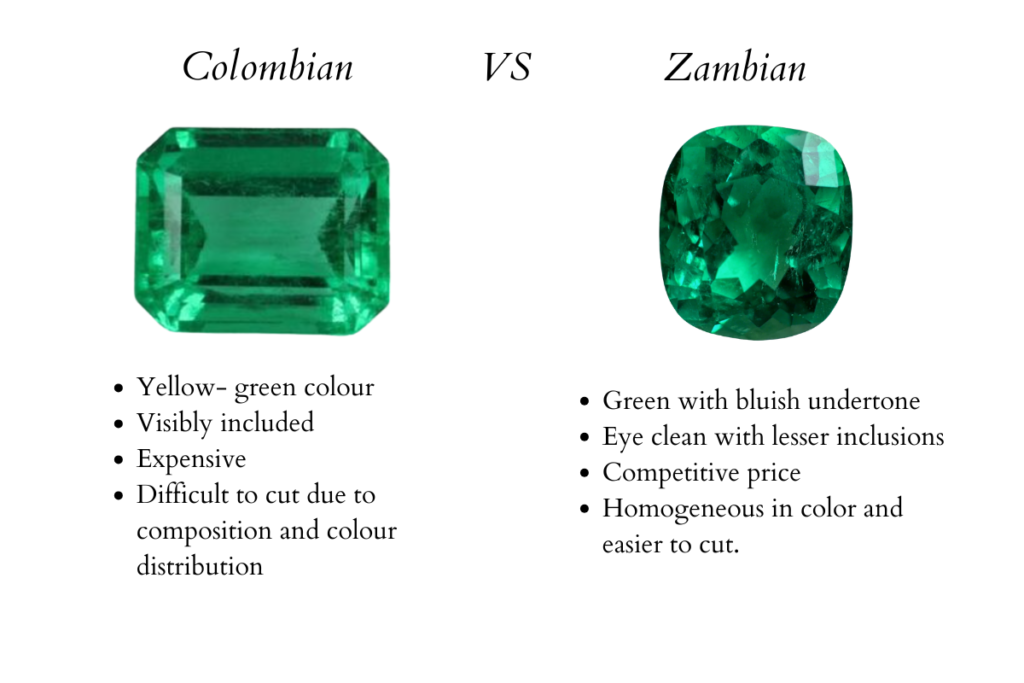
Zambia Emeralds vs Colombian Emeralds
The comparison between Zambia emeralds and Colombian emeralds is unavoidable because the two origins dominate the high-end emerald market.
Colombian emeralds are historically associated with a warmer and slightly softer green. The finest examples from Muzo or Chivor can display extraordinary internal glow and vivid saturation.
Zambia emeralds generally appear cooler, deeper, and slightly more structured visually.
Neither is objectively better.
It depends entirely on what the collector values.
Some buyers strongly prefer Colombian emeralds because of their history and softer appearance. Others prefer Zambia emeralds because they often offer:
- Better transparency
- Stronger crystal structure
- Larger clean sizes
- Lower treatment levels
- Better value per carat
This last point matters increasingly in today’s market.
High quality Colombian emeralds have become extremely expensive, especially in larger sizes. As prices continue rising, many collectors are beginning to realize that top Zambia emeralds still offer relatively strong value compared to their rarity and quality.
Zambia Emerald Prices and Value
Emerald pricing varies enormously depending on:
- Color
- Transparency
- Treatment
- Origin
- Size
- Cut
- Certification
Commercial Zambia emeralds may sell for a few hundred dollars per carat, while fine collector-grade stones can reach several thousand dollars per carat very quickly.
Exceptional untreated or minor-oil Zambia emeralds above five carats can command very significant prices, especially when the stones display strong transparency and balanced bluish-green saturation.
The gap between commercial and collector material is becoming larger every year.
This is important because many buyers still evaluate emeralds too generally. In reality, the finest few percent of Zambia emeralds are operating in a completely different category from mass-market material.
Why Zambia Emeralds May Increase Strongly in Value
I believe Zambia emeralds will continue gaining importance over the next ten to twenty years for several reasons.
First, the market is becoming more educated. Buyers today study origin, treatment, inclusions, and crystal quality much more carefully than before. Once collectors begin evaluating emeralds individually rather than simply buying the word “Colombian,” Zambia becomes extremely competitive.
Second, the finest Zambia emeralds already show characteristics collectors want increasingly: cleaner crystals, strong transparency, lower treatment levels, and contemporary color structure.
Third, truly fine emerald material is rare regardless of origin. The supply of top stones is not unlimited.
As more luxury houses, collectors, and investors compete for the same narrow category of fine Zambia emeralds, prices are likely to continue rising steadily.
There is also a strong aesthetic reason behind this shift.
Modern jewelry design has moved toward cleaner lines and stronger visual structure. Zambia emeralds fit naturally into that direction because the stones often feel more precise and architectural than softer Colombian material.
Younger collectors especially seem drawn to this balance.
Not because Zambia emeralds imitate Colombian emeralds, but because they offer something different entirely.
And that difference is exactly why the market is paying attention now.
Final Thoughts on Zambia Emeralds
Emerald has always been one of the most complex gemstones to buy properly. Color alone is not enough. You have to understand transparency, inclusions, treatment, structure, and the way the stone behaves in light.
That complexity is part of the reason collectors fall in love with emeralds in the first place.
The finest Zambia emeralds have a very particular presence. Deep green crystal. Slight blue undertones. Visible jardin that still allows light to move through the stone properly. They feel structured, calm, and confident in a way that is becoming increasingly rare in the gemstone world.
I think the market is only beginning to understand their long-term importance.
And over the next decade, I would not be surprised to see the finest Zambia emeralds move from being considered an alternative choice to becoming one of the most sought-after categories in the emerald market entirely.