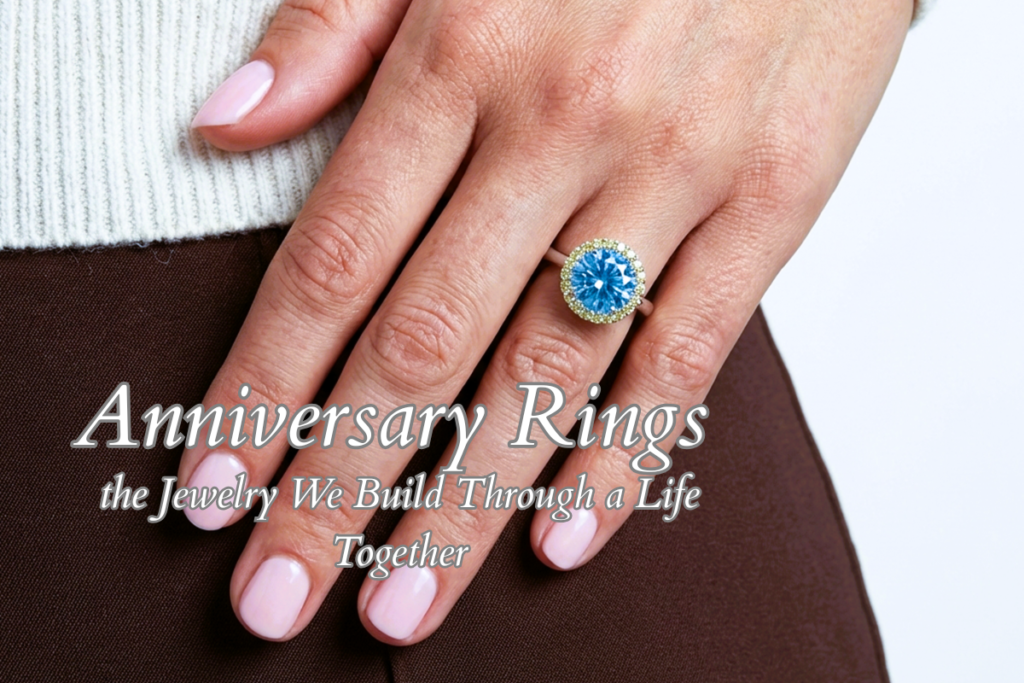
Anniversary Rings and the Jewelry We Build Through a Life Together
The engagement ring begins the story. The anniversary ring is what proves the story continued.
Why Anniversary Rings Matter More Than We Think
I’ve always found it strange that modern jewelry culture places almost all its emotional weight on the engagement ring, as if the relationship reaches its highest symbolic point before marriage has even truly begun.
The proposal is important. Of course it is. The engagement ring carries tension, anticipation, youth, and promise. But when I look at the couples I admire most — the ones who have actually built a life together over decades — I rarely think about the first ring. I think about accumulation. Layers. History made tangible.
A marriage becomes visible through time.
I grew up surrounded by this idea, although I only understood it properly much later. In my family, jewelry was never treated as a single monumental purchase. It was part of the rhythm of life itself. Anniversaries. Birthdays. Important moments. Difficult years survived together. New beginnings. Sometimes there was a reason. Sometimes there wasn’t.
My father gave my mother jewelry consistently throughout their marriage. Rings, earrings, gemstones, small commissions from artisans, collector stones discovered during travels. The engagement ring was never positioned as the ultimate object. It was simply the first piece.
The Emotional Meaning Behind an Anniversary Ring
Interestingly, my mother almost never wore her engagement ring.
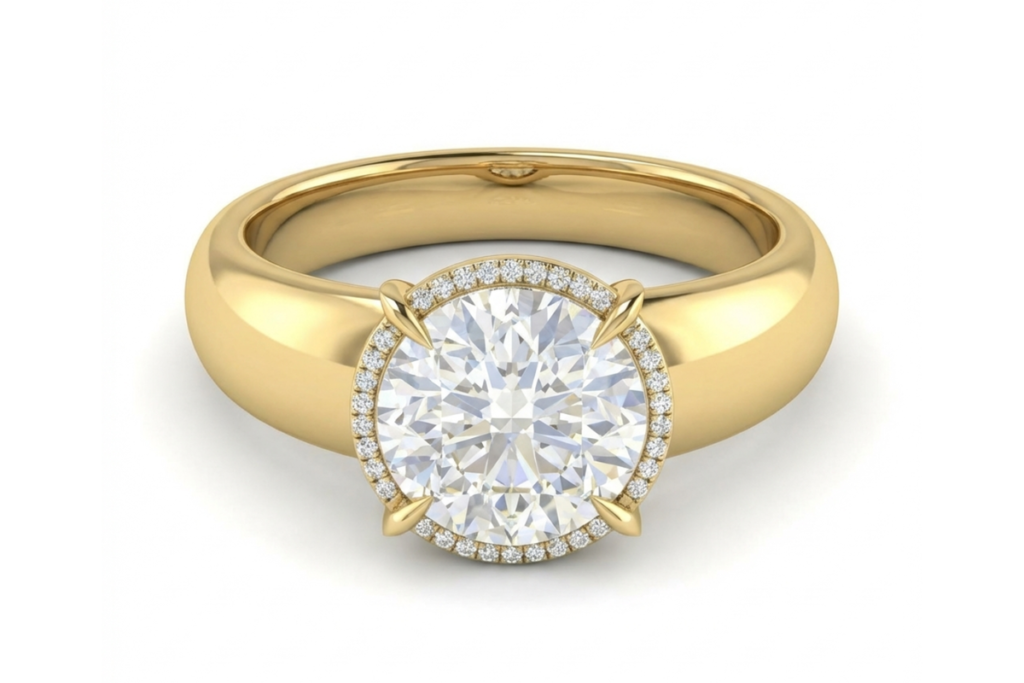
At some point, years later, it was stolen. A 2.5 carat round brilliant diamond set flush into a heavy ring — clean, direct, very much of its time. I still remember the shock in the house after it disappeared. Not because of the value alone, but because an object attached to memory had suddenly become unreachable.
There is something deeply unsettling about stolen jewelry. A watch can feel mechanical. Replaceable, in a way. Jewelry absorbs life differently. Skin contact, gestures, habits, scent, emotion. Especially rings. They become witnesses.
And yet, what remained after the theft was more important than the ring itself.
My mother still had a remarkable collection built slowly across decades. Not one heroic object carrying the entire emotional responsibility of a marriage, but many objects connected to many chapters of life. Diamonds. Collector sapphires. Every possible variation of blue gemstones you can imagine — because my mother has blue eyes, and my father became obsessed with finding shades that mirrored them differently.
Aquamarines with silver undertones. Cornflower sapphires. Spinels with grey-blue steel reflections. Indicolite tourmalines. Zircons that flashed electric blue under evening light.
And one piece that always stayed in my mind: a Type II blue diamond that became the push present for my birth.
That idea — marking life transitions through jewelry — shaped my understanding of what fine jewelry can actually become inside a family.
Not decoration. Continuity.
Engagement Rings Are Only the Beginning
I think this is partly why I struggle with the modern pressure surrounding engagement rings. So much discussion revolves around size, status, budget percentages, trends, and social media visibility. People spend months debating one ring as if it must contain the entire future of a relationship within a single object.
But life changes people. Taste changes. Bodies change. Style changes. Relationships deepen.
The ring that felt perfect at twenty-eight may no longer represent who you are at forty-five. And honestly, I think that’s healthy.
I almost prefer when a woman no longer wears her engagement ring every day after many years. Not because it lost meaning, but because the relationship expanded beyond that first symbol. New rings arrived. Different stones entered the story. A sapphire for an anniversary in Florence. Emerald earrings after a difficult year overcome together. A custom ring made after the birth of a second child. A redesign using family stones inherited from a mother or grandmother.
The jewelry evolves because the people evolve.
Anniversary Jewelry as a Symbol of Growth and Commitment
This is where anniversary rings become deeply interesting to me — far more interesting, in many ways, than engagement rings themselves.
An anniversary ring doesn’t carry fantasy. It carries evidence.
By the time it is given, two people already know each other completely. They’ve seen stress, disappointment, routine, financial pressure, aging, compromise, exhaustion. The illusion phase has ended. What remains is choice. Repeated choice.
That changes the emotional weight of the jewel entirely.
An engagement ring says: “I hope we will build a life together.”
An anniversary ring says: “We did.”
Those are very different things.
Historically, jewelry always functioned this way. If you study royal collections, aristocratic collections, or old European family jewel cases, you quickly realize that most important jewelry wardrobes were not created in a single moment. They were built incrementally across a lifetime.
A marriage generated objects over time. Brooches commissioned during travels. Rings marking births. Earrings purchased after relocations, anniversaries, reconciliations.
The collection itself became the biography.
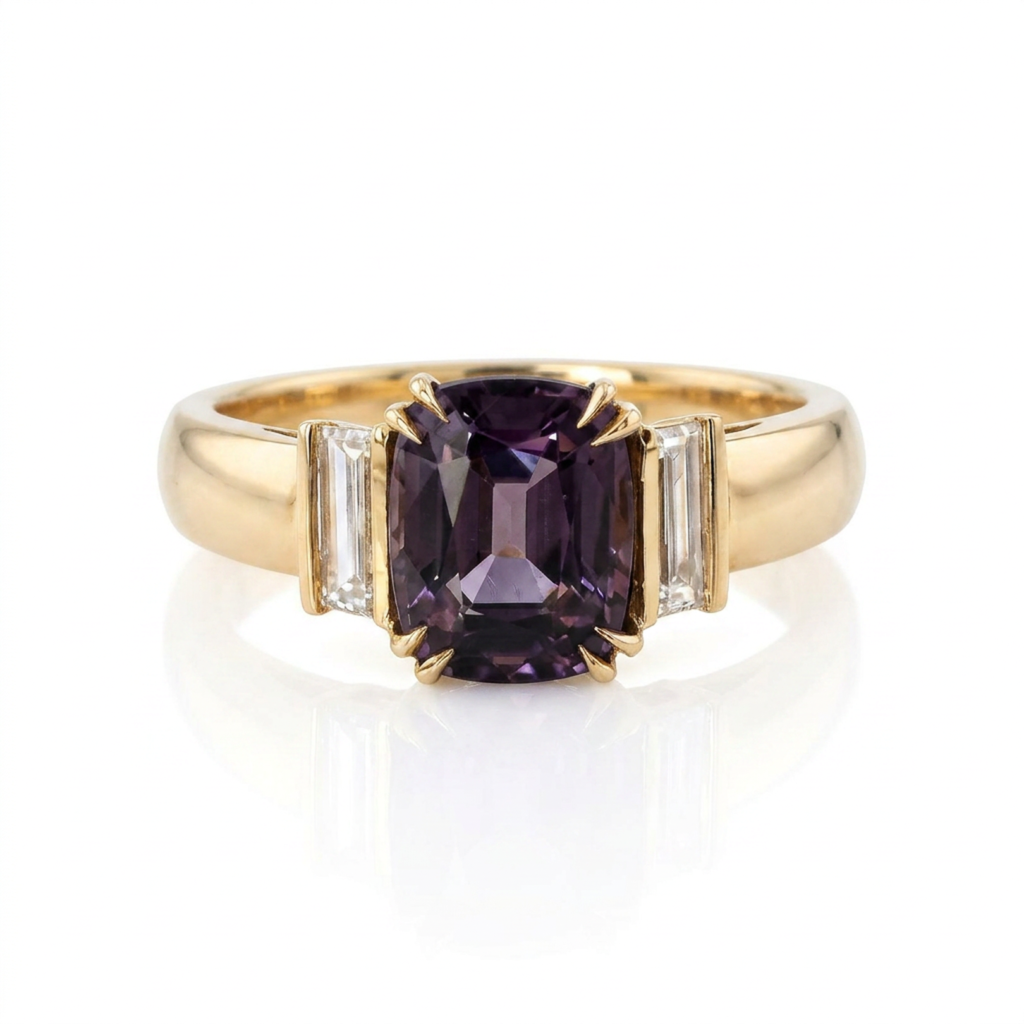
Building a Fine Jewelry Collection Through Marriage
Practically speaking, this approach creates a far richer relationship with jewelry. A woman with ten meaningful rings does not experience jewelry the same way as someone expected to emotionally attach herself to one single ring forever.
There is freedom in variety.
Some days require simplicity. Some require strength. Some require memory.
I’ve also noticed something else over the years, especially working closely with gemstones and private clients: women rarely wear their most important jewelry daily. The pieces carrying the deepest emotional meaning often emerge selectively — dinners, anniversaries, family gatherings, moments where memory itself becomes part of the styling.
My mother is exactly like this.
In everyday life she returns to the same familiar rings and earrings. Pieces integrated into muscle memory. But for certain occasions, she opens the larger collection almost like opening chapters of her life. Each piece immediately reconnects to a place, a year, a version of herself.
That emotional architecture cannot be created through one purchase.
It takes time.
Why the Jewelry Industry Should Focus More on Anniversary Rings
I think the jewelry industry underestimates this completely.
The market still treats the engagement ring as the emotional climax because it sells well commercially and photographs well socially. But emotionally, the more profound category is probably the anniversary jewel.
Not because it is bigger or more expensive. Sometimes it isn’t.
Because it acknowledges duration.
Duration is unfashionable today. Everything is optimized for immediacy — immediate attraction, immediate visibility, immediate validation. But jewelry operates differently from most luxury objects. Jewelry gains emotional density over time.
A ring worn for twenty years becomes physically altered by a life. Small abrasions soften edges. Gold warms differently against skin. Prongs wear smoother. The object becomes less perfect and more human.
That transformation matters to me.
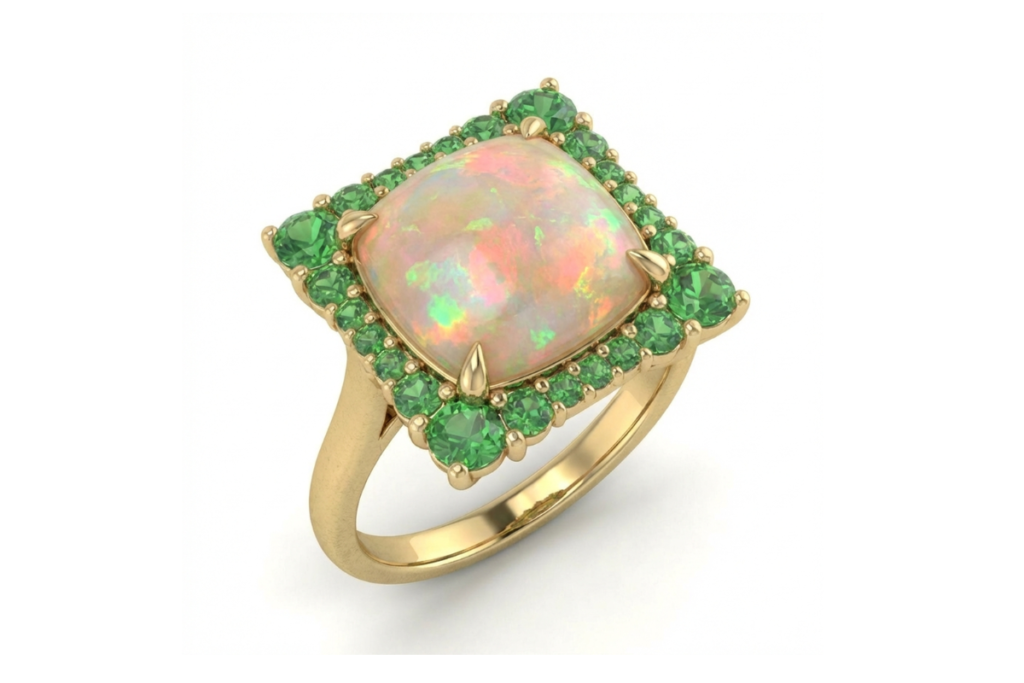
Designing Jewelry That Evolves With a Relationship
As a designer, I think often about what jewelry looks like after thirty years, not after three weeks under studio lighting. I care about whether a ring can survive multiple phases of a woman’s identity. Whether it can move between generations naturally. Whether the stone still feels emotionally true decades later.
Anniversary jewelry opens the possibility for that kind of long-term thinking.
It also allows relationships to escape aesthetic stagnation. I sometimes meet women who feel strangely trapped by their engagement ring because it no longer reflects their style, but they feel guilty replacing it or wearing something else more often.
I don’t think jewelry should create guilt.
The engagement ring can change. It can be redesigned. Reset. Worn occasionally. Layered differently. Moved to the right hand. Transformed into another object entirely.
The meaning does not disappear because the form changes.
If anything, transformation is the most honest reflection of marriage itself.
No long relationship remains identical to its beginning. Why should the jewelry?
Jewelry as a Family Legacy
What stays with me most from my family is not one individual piece, even though some were exceptional. It is the idea that love leaves physical traces over time if you allow it to.
A collection built slowly becomes almost architectural. You can see the decades inside it.
Certain sapphires belonged to years of stability. Certain diamonds marked moments of expansion. Certain commissions reflected changing taste, changing finances, changing confidence. Some pieces are technically more valuable than others. But emotionally, that hierarchy almost disappears.
Because memory equalizes objects.
A modest ring given at exactly the right moment can become more important than a flawless stone acquired carelessly.
The Real Meaning of an Anniversary Ring
I think many people intuitively understand this already. They just haven’t been given permission to think beyond the engagement ring as the singular symbol of romantic success.
But the real luxury — the real emotional luxury — is continuity.
To keep choosing each other long after the proposal photographs are forgotten. To keep marking life together materially. To keep adding chapters instead of freezing the relationship inside one moment from the beginning.
That, to me, is what anniversary jewelry should represent.
Not replacement. Expansion.
The engagement ring is not the final jewel. It is the first sentence of a much longer story. And honestly, I think jewelry becomes far more meaningful once we stop expecting one ring to carry an entire lifetime alone.