A gem with absolute character: Spinel, a complete guide
A gemstone that rose quietly, waited patiently, and now commands those who listen closely to light.
I still remember the first spinel that made me pause for real.
It happened at a gem expo — the kind where your eyes get tired before your heart does. I was moving from booth to booth, letting my instincts guide me, when a dealer unfolded a small paper parcel with a quiet, almost deliberate ease. Inside were a few spinels, each holding a color that didn’t commit to any familiar category. Not ruby. Not garnet. Something suspended between red, pink, and flame.
I picked one up. The stone didn’t flare under the lights the way other gems do; it glowed from within, as if its fire had nothing to prove. Its light felt clean, disciplined, almost thoughtful. That was what surprised me — a gemstone with its own temperament.
Spinel spent centuries mislabeled and overlooked, tucked into royal treasuries under the wrong name. Yet in that moment, I saw why collectors speak of it with a kind of quiet devotion. It’s a gem that rewards attention, not noise. A stone with integrity, clarity, and a fire that stays steady instead of loud.
Since that day, whenever I feel overwhelmed by the theatrics of the gem world, I think of that spinel. The one that taught me that true brilliance doesn’t rush toward you. It waits for the right eyes.

Where Spinel Is Born: Lands with Their Own Pulse
Every gem carries its birthplace like a faint scent. Spinel does this more strongly than most. When you ask a connoisseur which origin they prefer, you’re not asking about geography; you’re asking what kind of heartbeat they want inside the stone.
Burma (Myanmar): The Classic Flame
The storied Mogok Valley is where some of the world’s most hypnotic spinels were born. Burmese material is known for an inner ember—red that looks alive, not lacquered. GIA literature often describes these as possessing “vivid saturation” without needing treatment. What I see, holding them up to natural light, is something more emotional: a red that hums.
These stones are increasingly rare. Mines are aging. Production fluctuates wildly. Fine Burmese spinel is no longer a casual find; it’s a legacy find.
Tanzania (Mahenge): The Modern Dawn
Then there is Mahenge, a name that changed the course of spinel history. In 2007, gem traders stumbled upon crystals so luminous they seemed lit from within. The color—electric, arresting, sometimes bordering on neon—made the world look twice.
Mahenge material is often clean, with a fluorescence that sets them apart. When I source Mahenge rough, I feel as though the gem itself is reaching outward, pulling light toward it, not waiting for light to arrive.
Sri Lanka (Ceylon): The Subtle Poet
Sri Lankan spinels are softer in hue—lavender, steely blue, pastel pink, and silvery grey. They speak differently. Instead of the intensity of Burma or Tanzania, Ceylon spinel has a meditative quality. Some collectors overlook them; others, including myself, consider them among the most wearable and quietly refined of all gems.
Vietnam: The Blue Temples
From Luc Yen and Quy Chau come blues that defy expectation. True cobalt-blue spinel—verified through laboratory spectroscopy—is one of the rarest colors in all gemology. The supply is tiny, sporadic, and fiercely hunted by collectors. Even pale Vietnamese blues feel like early morning fog before the sun rises.
Tajikistan: Red with History
Tajik spinels, once used in royal regalia and tracked through the archives of antique jewelry, carry a slightly cool undertone—almost imperceptible but enough to distinguish them. They are the quiet link between ancient treasures and modern gem tables.
Spinel is global, but its roots are deep and distinct. When I hold a parcel of mixed spinels, I can often tell origin from energy alone. The earth leaves its signature.
How Spinel Is Treated — Or Rather, How It Isn’t
One of the reasons I respect spinel so deeply is its honesty.
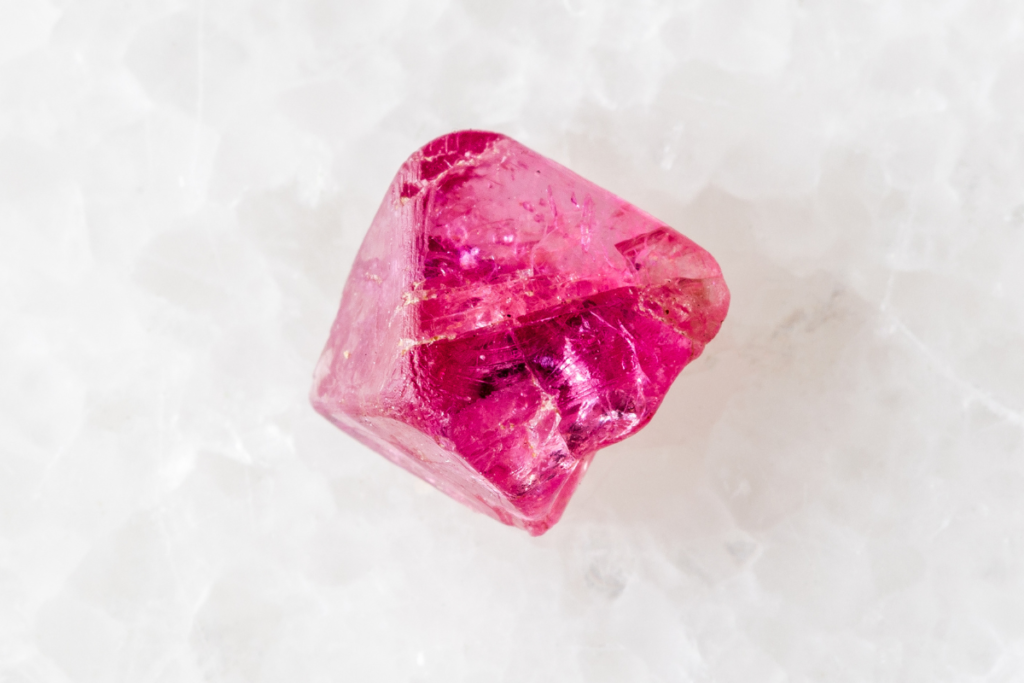
Most gem varieties, even the most iconic, undergo common treatments: heating, diffusion, irradiation. Spinels are different. Natural spinel is almost always untreated, and when heat is used, it rarely alters color meaningfully. In other words, what you see is what the earth made.
According to GIA and SSEF gemological sources, treatments are minimal:
- Heating: Rare and usually ineffective in shifting color dramatically.
- Glass filling, diffusion, irradiation: Not part of spinel’s story; they do not respond well to such interventions.
- Synthetics: Yes, synthetic spinel exists (created since the early 20th century), but it is easily identified by trained gemologists and rarely sold as natural in reputable markets.
This integrity makes spinel a purist’s gem. You aren’t buying a story modified by human intervention. You’re buying the earth’s original intention.
Rarity: A Gem That Became Scarce Before It Became Famous
Collectors sometimes ask me, “Is spinel rare?”
The true answer: extraordinarily. But unevenly.
It depends on color. It depends on origin. It depends on the mood of the mine that year.
Fine red spinel from Burma or Mahenge is rarer than most sapphires of comparable quality. Cobalt-blue spinel from Vietnam is one of the most limited gemstones on the planet. Lavender and grey spinels are more available but still not “common” in the way garnet or topaz might be.
Rough production is erratic. Mines vary from tiny artisanal operations to small, scattered deposits that yield little each season. Spinel is a gem that does not flood markets. It trickles through them.
And that scarcity is felt. When I find a fine spinel, especially above two carats, I hold my breath a little before buying it, knowing how few others may ever pass through my hands.
Sourcing Spinel: What I Look For When I’m Close to the Earth
Sourcing is a practice I treat almost as meditation. I’ve stood beside miners in Mogok, sifted parcels on the dusty ground in Tanzania, and negotiated with Sri Lankan dealers who speak in gentle, poetic gestures rather than words.
When sourcing spinel, I look for four elemental qualities.
Color: The Soul of the Stone
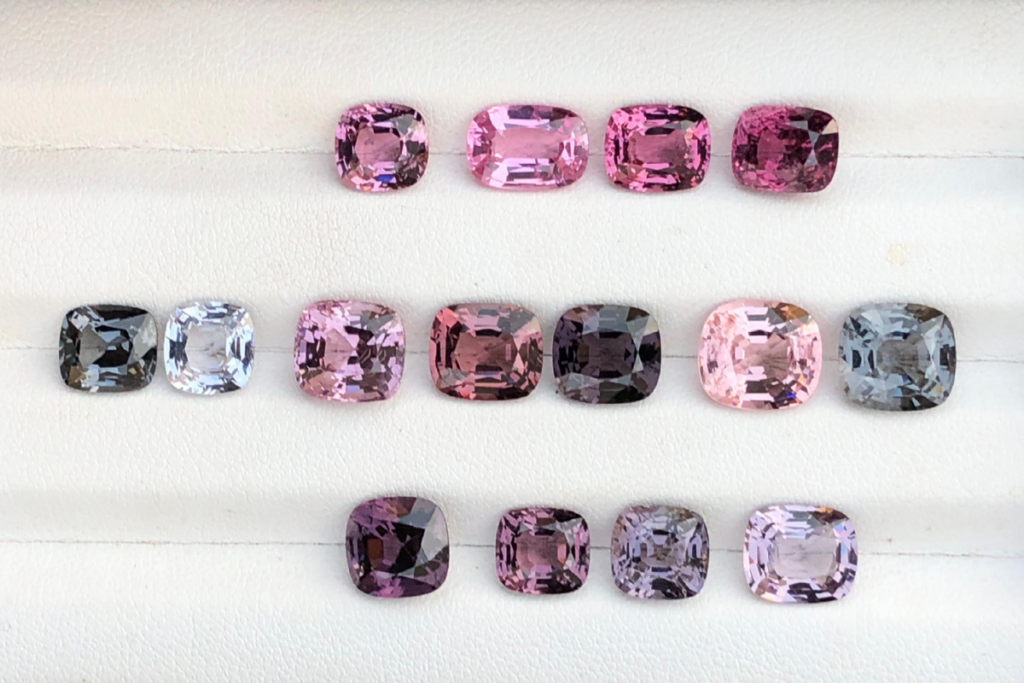
Spinel color comes in a spectrum that feels almost human—every emotion has a shade.
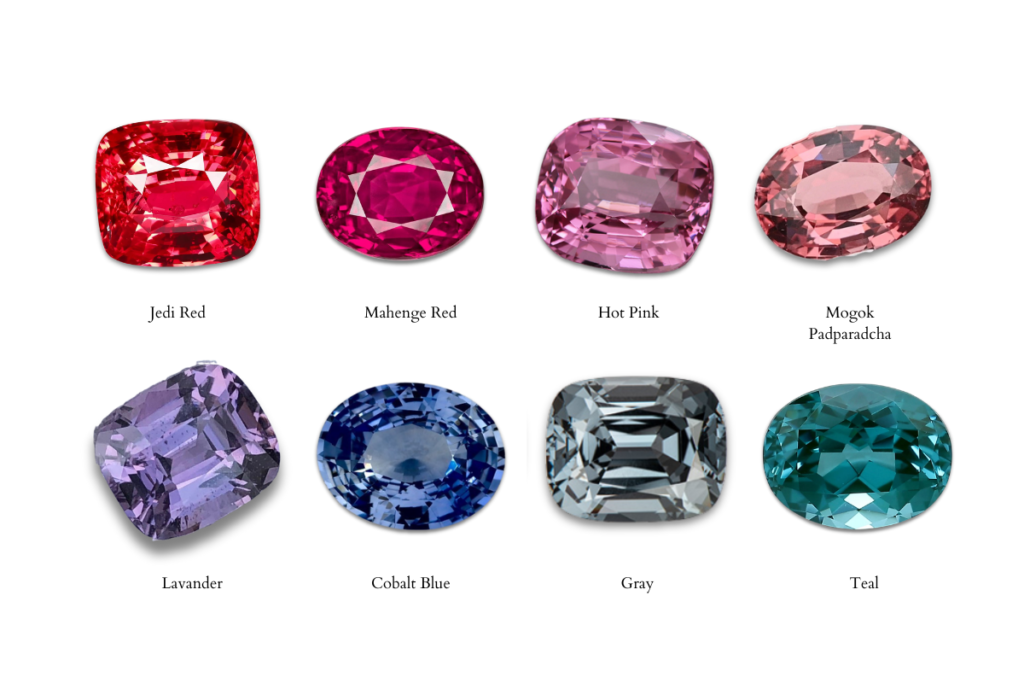
- Mahenge pink-reds with their energetic pulse.
- Burmese crimson with its controlled fire.
- Lavender and lilac that feel like whispered thoughts.
- Blue that oscillates between night and glacier.
- Greys that carry a minimalist elegance.
The best spinels have saturation that stays alive in dim light, not only direct sun. This is one of my personal tests: I place the gem in the shade. If the color persists, the stone has depth. If it dulls, I walk away.
Clarity: Transparency Without Sterility
Spinel often forms cleanly, yet perfection is rare. A fine spinel may have tiny silk-like inclusions or crystal traces that do not detract but instead create identity. I prefer clarity that feels natural, not too sterile.
Cut: Respect for the Crystal
Spinel has high refractive brilliance, so cut matters. I look for cuts that open the stone, not flatten it. Ovals and cushions often show spinel’s depth best. Precision cutting can make a Mahenge pink look electric.
Size: The Quiet Multiplier
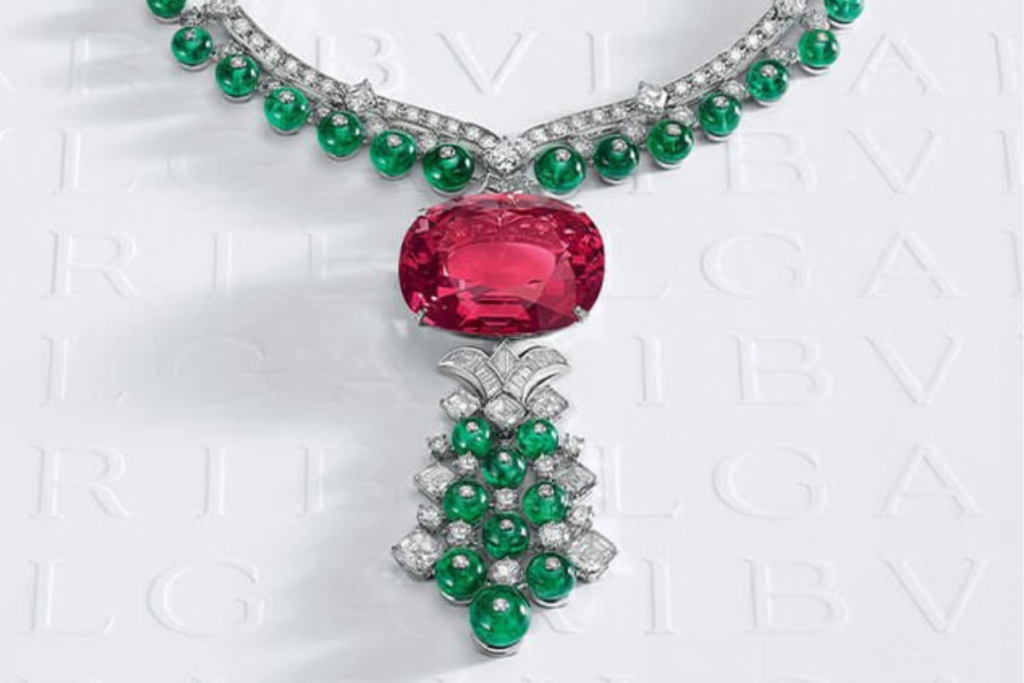
Spinel grows modestly. Stones above three or four carats are rare in strong colors.
When you reach five carats and beyond, you are entering museum territory—especially for red or blue.
What Gives Spinel Its Value (Without Giving Numbers)
Collectors often focus on value. I prefer to talk about quality first, then let value follow naturally.
Still, certain characteristics influence desirability:
- Color purity and intensity — the most important factor
- Origin — Burmese and Mahenge reds, Vietnamese cobalt blues
- Clarity and cut — brilliance without windowing
- Size — exponential rarity above certain thresholds
- Lack of treatment — a major advantage over many gems
- Market demand — rising steadily as collectors turn toward connoisseur stones
The truth is that fine spinel has entered a new era. Collectors realized they were overlooking one of the world’s great natural gems. As a result, values have strengthened over the last decade — not because of trend, but because supply tightened while awareness grew. A mature market always gravitates toward integrity, and spinel has that in abundance.
Facts That Make Spinel Even More Unforgettable
A few truths I often share with clients, because they capture the soul of the gem:
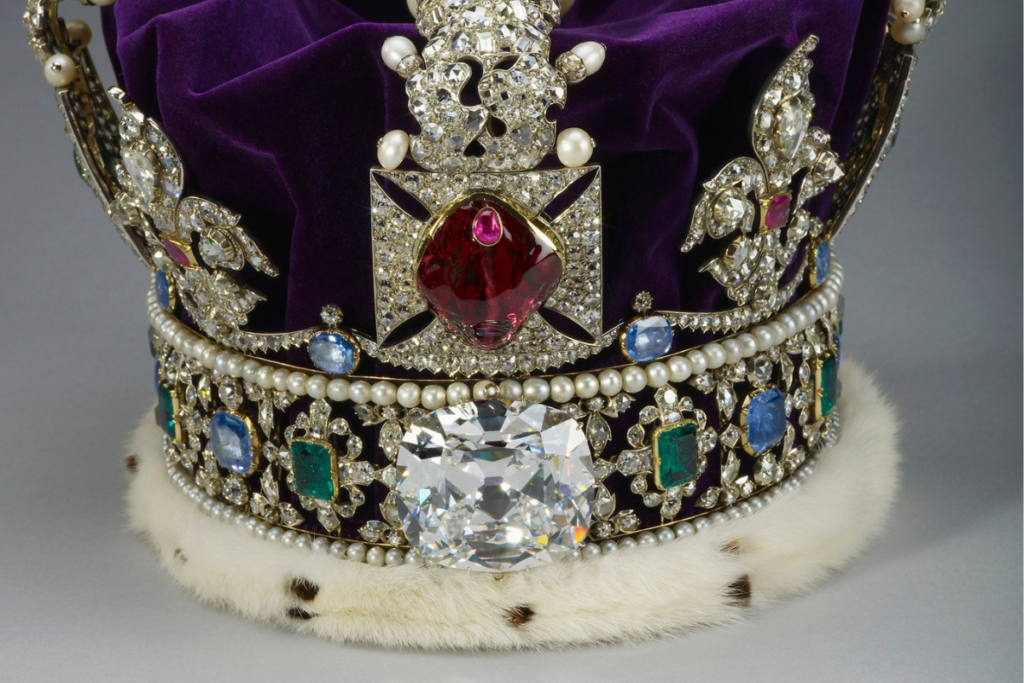
- Many “rubies” in historic crown jewels are actually spinel — including the Black Prince’s Ruby in the British Imperial State Crown.
- Spinel’s chemical structure (MgAl₂O₄) gives it a crisp, sharp kind of brilliance distinct from ruby’s deeper glow.
- It occurs in colors that sapphire cannot replicate naturally — especially the neon-like pinks of Mahenge.
- Spinel is singly refractive. Its light returns cleanly, without doubling. This gives the gem a very modern clarity to the eye.
- Because natural treatments are rare, spinel is one of the most ethically transparent gems a collector can buy.
- Many of the most celebrated spinels in museums are over 500 years old — this stone ages with remarkable grace.
The more you learn about spinel, the more it feels like a gem that stood back for centuries, letting others take the spotlight, only to step forward now with quiet confidence.
A Stone With Both Spirit and Structure
What keeps me returning to spinel, both as a collector and someone who sets stones into jewelry, is the way its light behaves. Spinel doesn’t filter or disguise anything — the light comes through clean, honest, and immediate. Some gems ask you to search for their character. Spinel shows it the moment it hits your hand. The gradients are natural, almost effortless, moving from one tone to another with a clarity that feels deliberate. Vivid color, but never forced. Just its own internal truth.
When I design with spinel, I let the stone lead. It doesn’t require ornament or distraction. It simply needs space so its color can breathe and its story can stay intact. A well-cut spinel becomes the anchor of a piece — a point of focus that holds everything together without trying. That’s the part I appreciate most: the straightforwardness. The light travels cleanly, the color speaks clearly, and the result is a jewel that feels sincere.
Spinel is the stone I choose when I want a piece to carry a strong narrative without excess — a gem that stands on its own, honest in its glow and impossible to imitate.
Closing Reflection: The Quiet Brilliance
Some gemstones enter your life with a flourish.
Spinel arrives like a revelation.
It doesn’t force itself into your attention. It invites you to look twice.
And the second look is where devotion begins.
If ruby is the heartbeat, spinel is the pulse beneath it — steadier, quieter, and more mysterious. I often say that choosing spinel is choosing yourself. Not the version of you that performs for the world, but the one that listens, perceives, and responds to the subtler movements of color and light.
Jewelry doesn’t decorate us. It reflects the frequencies we already carry.
Spinel, in its silent fire, reminds us of the strength found in understatement — and the beauty of light that rises from within.