Sapphires vs Spinels: A Clear, Honest Guide for Buyers and Collectors
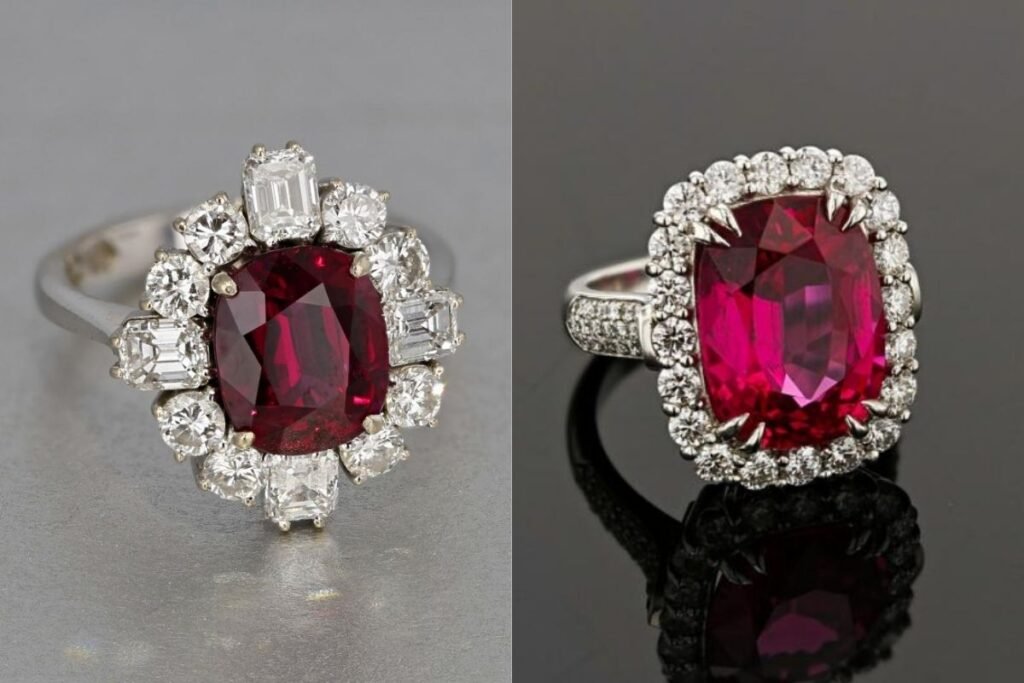
People put sapphires and spinels in the same conversation for a simple reason: they often land in the same colors, they come from the same deposits, and for most of history, they were mistaken for each other. More than one king wore a “ruby” that turned out to be spinel. No drama there — just the way things were before modern gem labs.
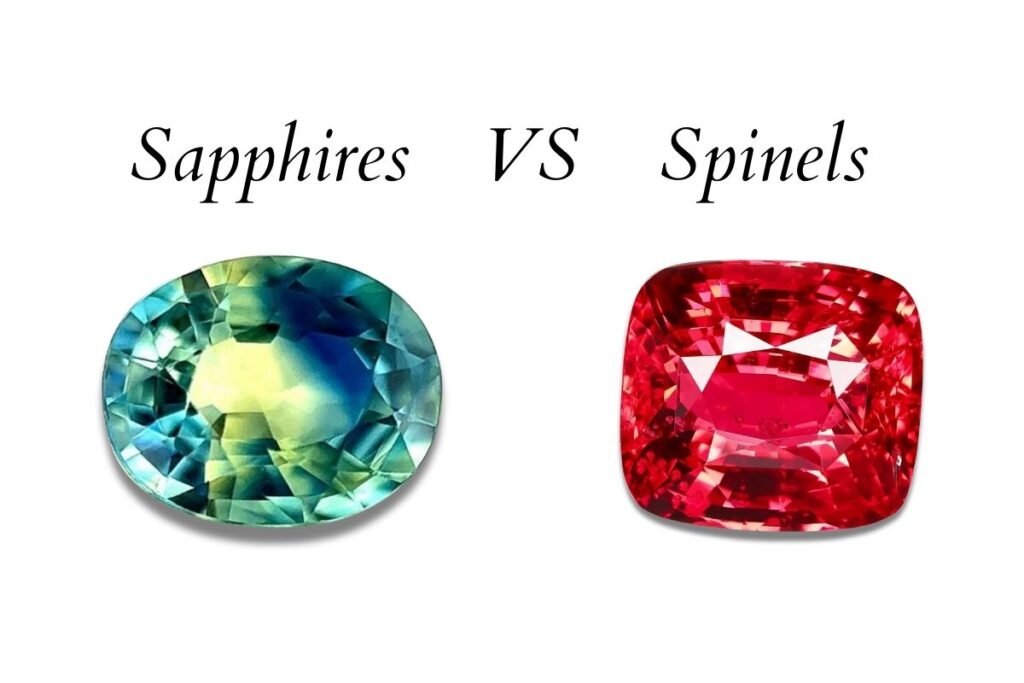
If you’re choosing between the two today, you’re usually deciding between heritage and recognition (sapphire) and clarity and raw color (spinel).
This guide walks you through how each one behaves — in light, in the hand, and on the market.
Quick, side-by-side
I’ll keep this table clean and readable. Think of it as a first impression.
Feature | Sapphire | Spinel |
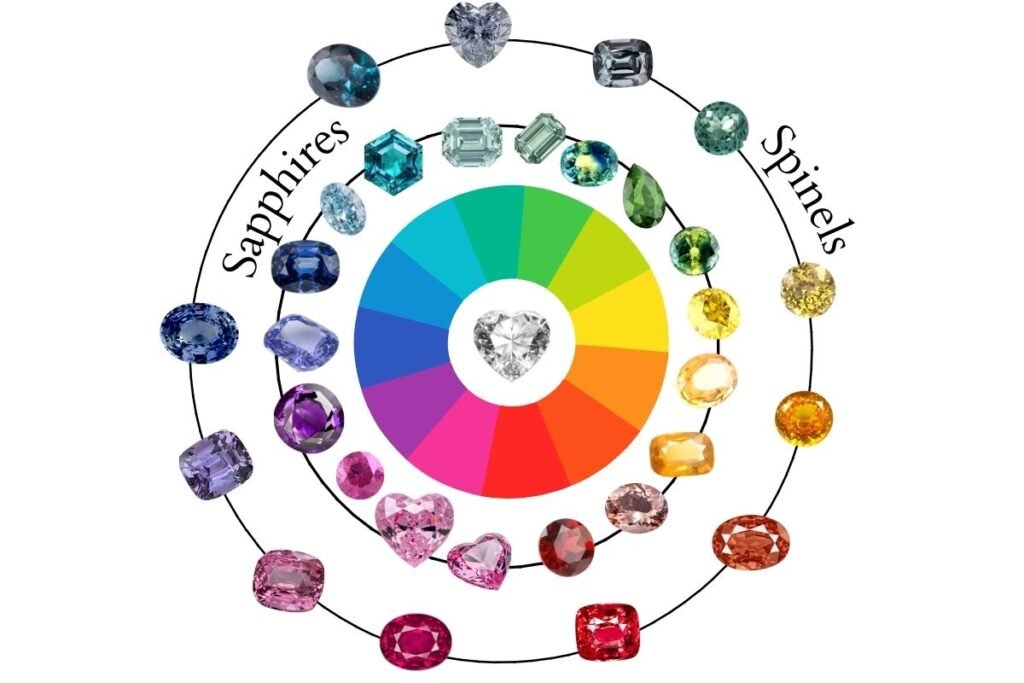
Color | Blues, pinks, yellows, greens, padparadscha | Reds, hot pinks, cobalt, lavender, grey |
Clarity | Often included | Usually clean |
Light return | Strong glow | Bright, crisp flashes |
Durability | Mohs 9 | Mohs 8 |
Treatments | Heat common | Rarely treated |
Price range | Very wide | Tight mid-high range |
Size rarity | Clean >8 ct rare | Fine >4 ct rare |
Jewelry use | All styles, daily wear | Rings with care, great for pendants |
Investment | Strong, long-term | Rising, driven by rarity |
Now let’s slow down and talk like two people sitting at a jeweler’s bench.

Where they come from
Sapphires grow in metamorphic rock and volcanic rock. That’s geek-speak for “places where the earth compresses and heats minerals until they change shape.”
You’ll find them in Sri Lanka, Madagascar, Myanmar, Thailand, Australia, and Montana. Some origins carry weight — Kashmir and Burma especially.
Spinel comes from the same type of geological neighborhoods. If corundum is around, spinel often isn’t far. Myanmar’s Mogok valley is famous for both. So is Sri Lanka. Tanzania’s Mahenge district gave us a burst of neon red and pink spinels a few years back that collectors still talk about. Vietnam’s Luc Yen region produces cobalt blues — rare, charged stones with a light that feels almost electric.
That’s the main difference at this stage: sapphire has centuries of branding behind it, while spinel has rarity on its side.
Color in real life
This is where the two gems part ways.
Sapphire has the wider palette: royal blue, cornflower blue, pink, yellow, green, padparadscha, purple.
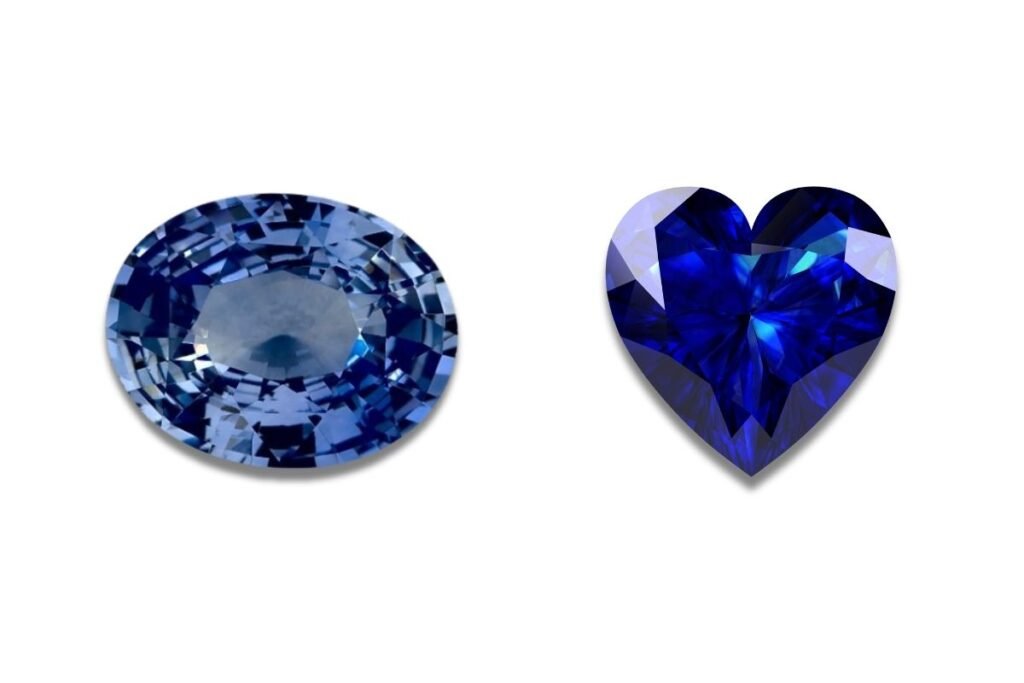
Its blues hold depth. Some feel velvety. Some feel open, almost airy. A fine sapphire carries color the way an ocean carries distance — not loud, just steady.
Spinel is a different creature. The colors hit faster. Cleaner. There’s no veil. When light enters a red spinel, it moves through it like water through glass.
Mahenge pinks look as if they’re plugged into a current. Cobalt spinel has a blue that feels condensed, tighter than sapphire, almost like ink before it spreads.
Both are beautiful, but they don’t deliver the same experience.
Sapphire glows.
Spinel beams.
That’s your color difference in one line.
Clarity — what the eye sees
Most sapphires carry small internal features: silk (rutile needles), fingerprints, growth lines.
Not ugly. Not a flaw. Just part of their identity.
Some silk even softens the color and adds value — Kashmir stones are famous for this.
Spinel usually grows cleaner. When you tilt a good spinel, your eye moves straight through it. No haze. No roadblocks.
This is why cutters love working with spinel: the crystal lets them shape the light any way they want.
If you like that “crystal clear” feeling, spinel wins this round.
How they handle light
I’ll keep the science simple. Brilliance and dispersion are fancy ways to say “how light bounces” and “how much fire you see.”
Sapphire’s brilliance shows as steady brightness. The light isn’t scattered wildly; it glows from inside the stone.
Spinel has stronger dispersion, so you get sharper flashes. It’s a quicker kind of brightness — like a match flaring for a split second.
That’s the metaphor for this section:
Sapphire is a lantern.
Spinel is a spark.
Both are beautiful. It just depends on what kind of light you enjoy more.
Cutting the stones
Sapphires are often cut in deeper shapes to hold color. If the cutter makes it too shallow, you get windowing — a see-through patch in the center. If they cut too deep, the stone looks darker.
Spinel gives cutters more freedom. It’s usually clean, so they can play with shapes and brightness without fighting inclusions or color zoning. Cushions and ovals are most common, but rounds pop like crazy.
A well-cut spinel looks alive even in soft lighting.
A well-cut sapphire feels steady and confident.
Wearing them
Durability is simple:
- Sapphire: Mohs 9. Tough, scratch-resistant, great for rings you never take off.
- Spinel: Mohs 8. Still strong, but not a tank. Better with some care.
If you want a stone you can forget about, choose sapphire.
If you want color purity and don’t mind a bit of mindfulness, spinel is fine.
Both handle everyday life, but sapphires handle it better.
Treatments — the truth buyers often skip
Almost all sapphires are heated. Heat improves color by dissolving rutile silk and smoothing zoning. It’s accepted. It’s part of the market.
More aggressive treatments exist — diffusion, beryllium — but they lower value.
Spinel, in contrast, is usually left alone. Heating does little to improve it, so most dealers don’t bother.
This is one of spinel’s biggest advantages: what you see is what nature made.
Price — real-world ranges without playing games
Sapphire pricing swings wildly because the category is huge. You can find stones that cost less than a dinner and stones that cost more than a house.
Untreated fine blues, padparadschas, and Kashmir sapphires land at the top.
Spinel sits in a narrower price corridor.
Commercial stones are reasonable.
Fine stones cost more.
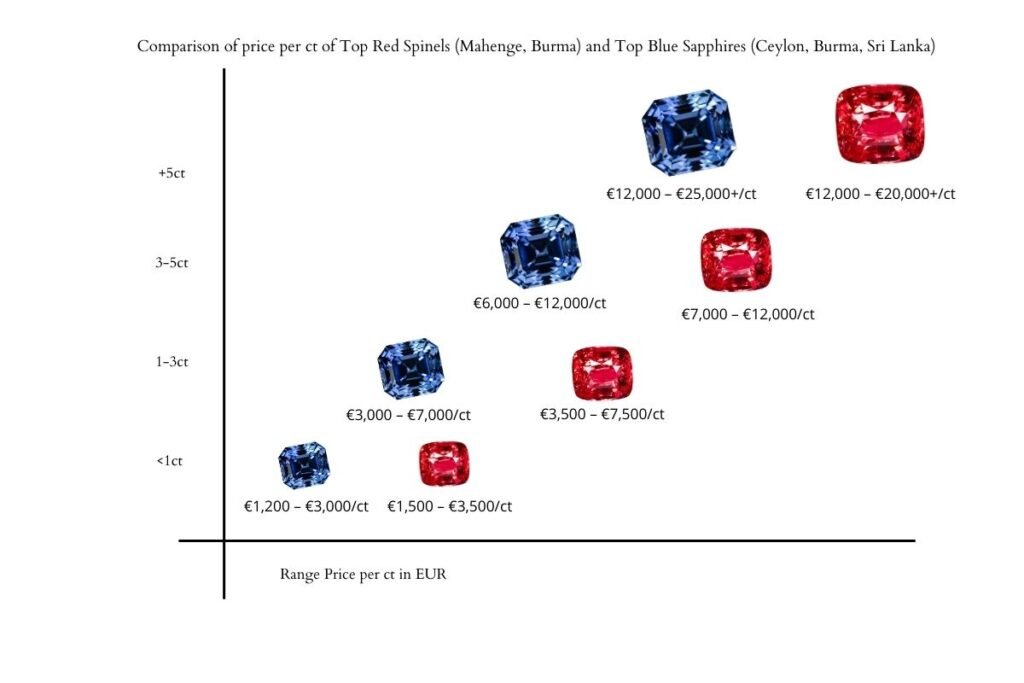
Top stones — cobalt, intense red, or neon Mahenge — can reach sapphire-level prices, especially in sizes above 3–4 carats.
If you compare quality to quality, spinel often gives better value.
Rarity — the part people underestimate
This part is important.
Fine spinel is rarer in nature than fine sapphire.
Especially in larger sizes. A clean, vivid 4 ct spinel from Burma or Vietnam is a real find.
Sapphire’s rarity sits more in the untreated + top color + top origin combination. Plenty of sapphires exist. Very few meet all criteria.
So you get two kinds of rarity:
- Natural rarity (spinel)
- “Top-tier criteria” rarity (sapphire)
Both matter, depending on the buyer.
Investment — where the money actually moves
Sapphire has the track record.
Unheated royal blue.
Cornflower blue.
Padparadscha.
Kashmir.
These categories have long-term demand and consistent performance at auction.
Spinel is the rising star.
Collectors are paying attention because supply is shrinking. Mahenge production isn’t what it used to be. Cobalt spinels from Luc Yen and Myanmar are limited. When good material dries up, prices move.
The short version:
- Sapphire = stable, recognized, long-term safe.
- Spinel = niche, rare, rising.
Who each gem fits best
Let me do this like a conversation.
If you want a ring you’ll wear every day:
Sapphire.
If you love bright, clean color:
Spinel.
If you’re building a long-term investment box:
Start with sapphire. Add spinel for rarity.
If you’re a first-time buyer who wants natural, untreated color:
Spinel is honest and straightforward.
If you want the most famous blue:
Sapphire. No contest.
If you want the sharpest pink or red under daylight:
Spinel.
Final word — clear and simple
Sapphire carries history and durability.
Spinel carries truth and rarity.
Sapphire is the trusted classic — the gem you choose when you want permanence and prestige.
Spinel is the collector’s stone — bright, direct, untouched.
Both have a place in a serious collection.
You just need to decide which kind of beauty you want to live with.