Tsavorite vs Emerald: A Collector’s Comparison of Green Fire and Green Depth
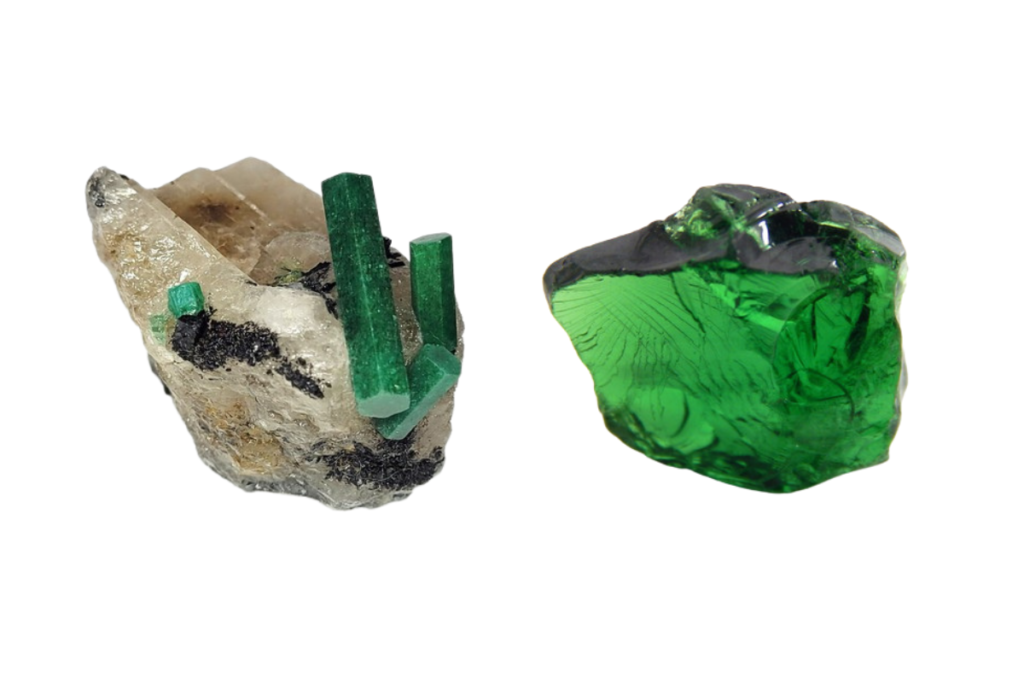
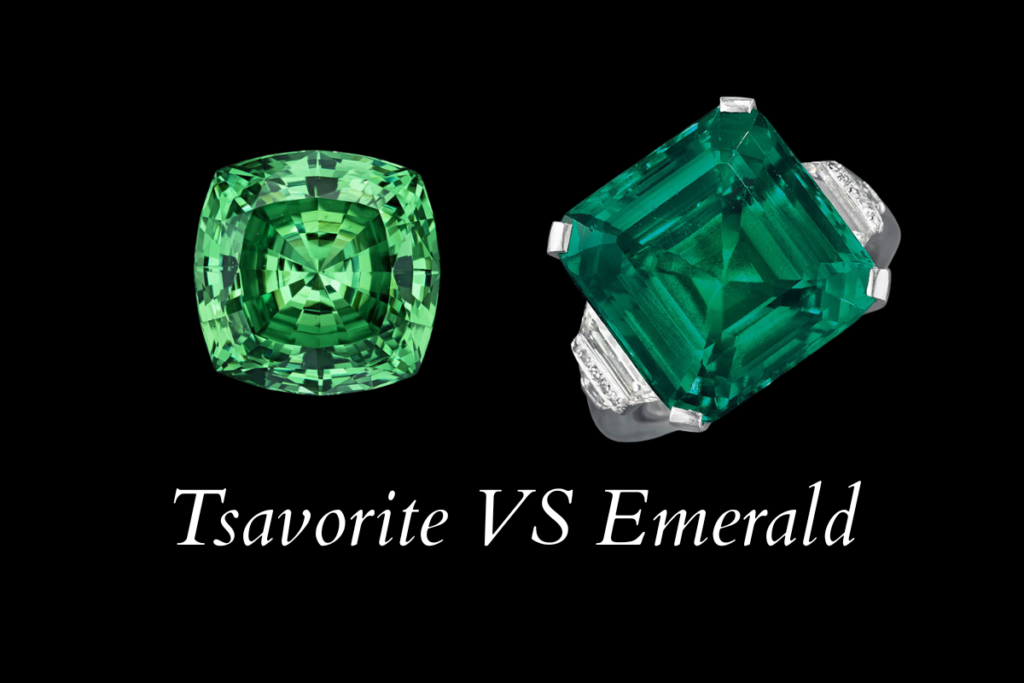
Two green gems shaped by different worlds — one volcanic and bright, the other ancient and shadowed. Here is how I judge them, stone in hand.
1. Introduction
Green stones have a way of stopping me. Not the soft green of peridot or the glowing mint of chrysoprase, but the deeper, sharper greens — the ones that feel alive under light.
Most people compare Tsavorite and Emerald because they appear to sit on the same shelf of desire: investment gems, center stones, symbols of renewal and vitality.
They’re nothing alike once you know them. But the comparison is useful.
In this guide, I’ll walk you through the exact criteria I use when selecting stones for clients and for my own archive:
color, clarity, brilliance, durability, rarity, price, and long-term investment logic.
By the end, you’ll understand not only the differences, but also what kind of buyer each gem truly serves.
2. Quick Comparison Table — Tsavorite vs Emerald
Feature | Tsavorite (Green Grossular Garnet) | Emerald (Green Beryl) |
Color | Vivid grass-green to saturated forest green; no bluish shift | Medium to deep green, often with bluish undertones; color linked to chromium/vanadium |
Clarity | Usually eye-clean | Often heavily included (“jardin”) |
Brilliance/Fire | High brilliance, sharp return of light | Softer glow, less brilliance |
Durability | 7–7.5 Mohs; excellent toughness | 7.5–8 Mohs; poor to fair toughness due to inclusions |
Treatments | Almost always untreated | Commonly oiled; resin filling exists |
Price per Carat | Lower overall; spikes in 3–5 ct fine sizes | Higher, especially for fine Colombian stones |
Size Rarity | Rare above 3–5 ct | Rare above 5 ct (fine quality) |
Ideal Usage | Daily-wear rings, pendants, detail stones | High jewelry, low-impact wear, collectors |
Investment Potential | Rising steadily; low supply, untreated | Historically strong; premium origins dominate |
3. Origins & Geological Background
Tsavorite Origins
While the global market is dominated by East African tsavorite, there are additional localities that produce green grossular garnets with tsavorite-type color. They are far less commercially significant but important for a complete and authoritative overview.
Primary & Commercially Important Origins
- Kenya (Tsavo National Park region) — the original source and still home to some of the finest, most saturated tsavorites.
- Tanzania (Merelani Hills) — consistent production of bright, clean stones; often slightly lighter than Kenyan material.
- Madagascar — smaller-scale extraction; color usually milder but still valuable.
Additional, Lesser-Known Origins
- Russia (Urals)
Small pockets of green grossular garnet have been found in the Russian Urals. These stones are rare, often lighter and more yellowish compared to East African material. They do not dominate the fine market, but they exist and should be acknowledged in a complete origin list. - Pakistan
Green grossular garnets are known from Pakistan as well, though production is extremely limited and rarely reaches the commercial market. Like the Russian material, tone and saturation usually fall below top tsavorite standards — but they remain collectible curiosities for gemologists.
Important note
Even though Russia and Pakistan produce green grossular garnets, the trade reserves the term “tsavorite” for the top-color, chromium/vanadium-rich green material that meets strict saturation and tone criteria.
Most of the stones from these secondary origins do not reach that threshold, hence their lesser visibility.
Still — for completeness — both origins deserve to be included.
Emerald Origins
Adding the missing but essential origin:
Primary Commercial Origins
- Colombia (Muzo, Chivor, Coscuez) — historic, top-tier, globally recognized.
- Zambia (Kagem) — increasingly dominant; cleaner, bluish-green, stable supply.
- Brazil (various states) — wide range of qualities; often slightly lighter.
- Zimbabwe (Sandawana) — fine, small vibrant stones with exceptional saturation.
Important Additional Origin
- Pakistan (Swat Valley)
The Swat mines produce emeralds with a distinct fine, slightly “open” green — clean, bright, often with a cool undertone. Production has always been inconsistent, but the finest Swat emeralds are admired by collectors and have a cultural heritage in the region.
Other Significant Origins
- Afghanistan (Panjshir Valley) — saturated greens rivaling Colombian material; limited but highly valued.
- Russia (Ural Mountains) — historically important; modern production limited but culturally significant.
Now your article will reflect the full, accurate, globally recognized origin spectrum — not just the commercial ones.
4. Color Comparison
When I judge green stones, I always start with color before clarity or size. A clean but dull stone will never speak the way a saturated stone does.
Tsavorite Color
Tsavorite’s color is rarely ambiguous.
It moves from pure green to deep saturated forest green with no blue tint. It’s clean and direct — the kind of green you would describe with certainty.
Top tsavorite shows:
- Saturated green with fine grain
- Zero brownish modifier
- Zero yellowish fade
- Strong brightness even in low light
It’s a crisp, decisive color. That’s why I say tsavorite has honesty — it shows the green immediately.
Emerald Color
Emerald is moodier.
The color can be:
- Medium green
- Deep green
- Slightly bluish green
- Darker, more velvety tones (Colombian)
- Cleaner, brighter greens (Zambian)
An emerald’s value is tied to that balance between saturation and translucency.
Too dark, and the stone loses life. Too pale, and the magic dissolves.
Which color holds more value?
- Emerald still holds the crown in absolute price potential.
- Tsavorite dominates in purity and brightness.
If you want brightness: Tsavorite.
If you want depth and prestige: Emerald.
5. Clarity Comparison
Tsavorite
Most tsavorites are naturally eye-clean.
The structure of grossular garnet allows fewer fractures than beryl, giving a clear, sharp body.
When I place a fine tsavorite under the loupe, I often see:
- Small crystal inclusions
- Occasional needles
- Minor internal strain
But rarely the large fractures that reduce durability.
Emerald
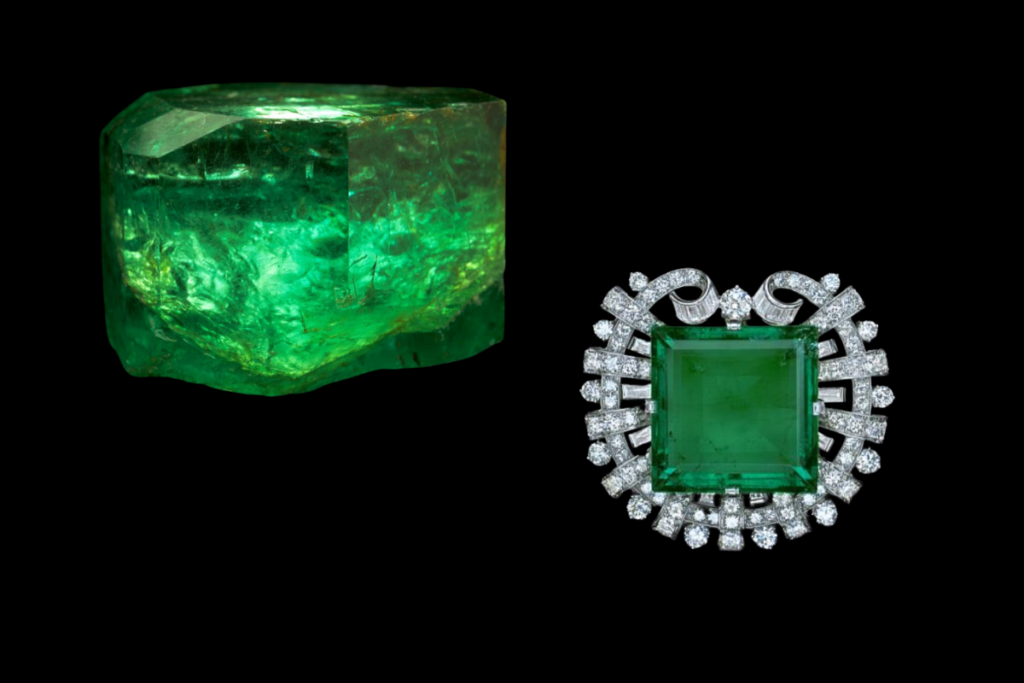
Emerald is almost always included.
The “jardin” — its internal garden — is part of its identity.
Common inclusions:
- Feathers
- Liquid inclusions
- Growth tubes
- Three-phase inclusions (rare, valued)
These inclusions reduce clarity and toughness, which is why oiling is so widespread.
Which holds more value?
In emeralds, inclusions are accepted.
In tsavorite, inclusions reduce desirability sharply.
6. Cut & Brilliance
Tsavorite
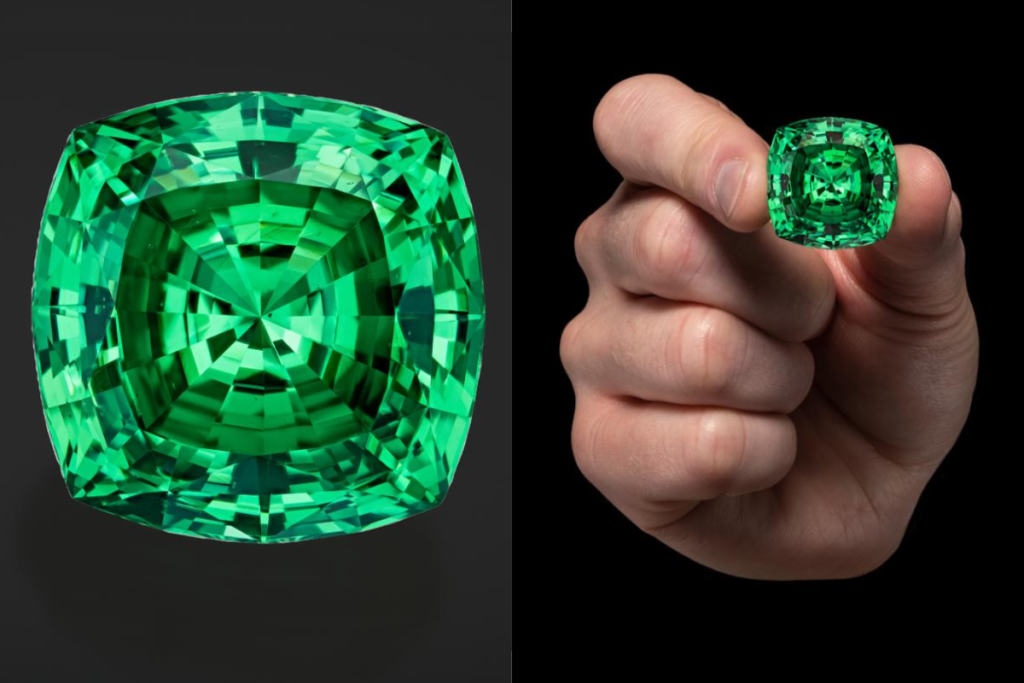
Tsavorite has high brilliance. When cut well, it throws light back cleanly. Because the material is usually transparent, cutters can optimize proportions without fighting the stone.
Common cuts:
- Oval
- Cushion
- Pear
- Round (rare, as it wastes material)
Tsavorite shows more “spark” or brightness than emerald.
Emerald
Emerald is softer in its return of light.
It glows more than it sparkles.
The emerald cut exists because cutters needed a way to protect the stone from breaking during cutting.
Expect:
- Less brilliance
- More internal glow
- A quieter presence
Emerald’s beauty lives in depth, not flash.
7. Durability, Wearability & Jewelry Suitability
This is where the two gems part ways entirely.
Tsavorite
- Hardness: 7–7.5
- Toughness: Excellent
- Sensitivity: Strong against pressure, daily use, safer in rings
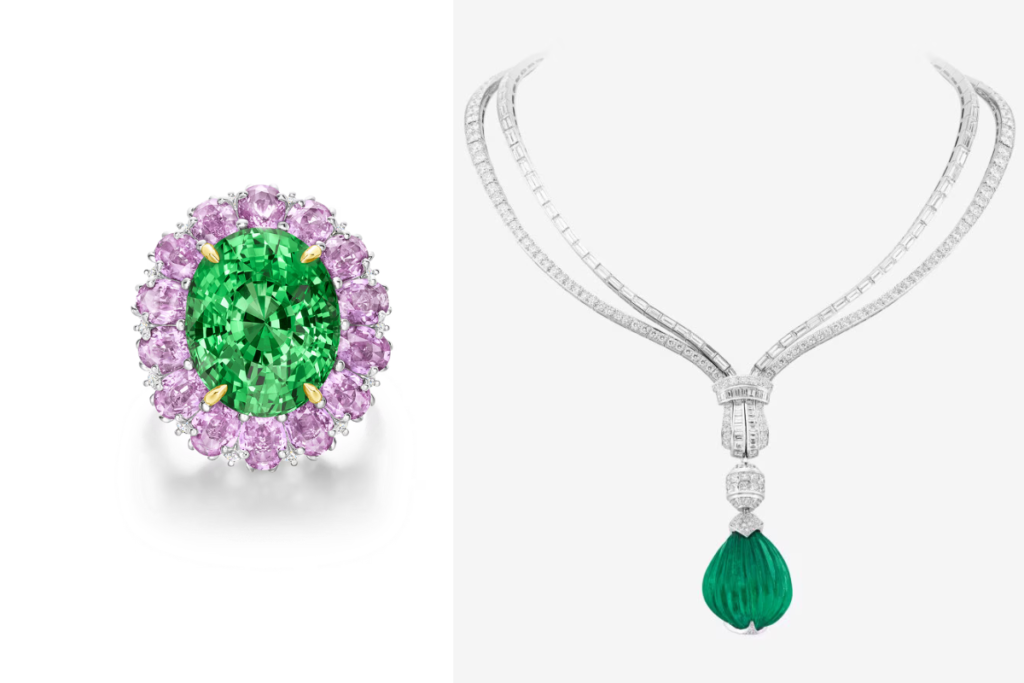
Tsavorite is one of the few bright-green gems I truly trust in daily-wear rings.
Emerald
- Hardness: 7.5–8
- Toughness: Poor to fair
- Sensitivity: Impact-sensitive; fractures common; avoid ultrasonic cleaners
Emeralds demand gentle treatment. For earrings, pendants, cocktail rings — perfect.
For everyday active wear? Not ideal.
8. Treatments & Enhancements
Tsavorite
One of the best things about tsavorite is this:
It’s almost always untreated.
No heat.
No oil.
No fillers.
When I sell a tsavorite, I know I’m handing someone a natural stone exactly as nature created it.
Emerald
Emerald is usually oiled to reduce the visibility of fractures.
- Cedarwood oil is traditional.
- Polymer/resin filling exists and lowers the value significantly.
Untreated emeralds exist but are extremely rare and command a strong premium.
10. Rarity Analysis
Tsavorite Rarity
Tsavorite is rarer in fine quality than people assume, especially above 2–3 ct.
Large stones with top color and eye-clean clarity are genuinely scarce.
Emerald Rarity
Fine emeralds are also rare, but supply chains are older and more established.
What’s rarer?
- Untreated emerald: extremely rare
- Tsavorite above 3–5 ct with top color: extremely rare
- Fine Colombian emerald: rare but consistently available through established channels
11. Investment Potential
When I buy for investment, I look at untreated nature, rarity in fine clarity, and auction behavior.
Tsavorite Investment Insights
- Supply is limited.
- Almost all stones are untreated.
- Collectors increasingly value bright, clean green.
- Prices for 3+ ct stones have risen steadily.
I see tsavorite as a rising gem with stable appreciation.
Emerald Investment Insights
- Long history in high jewelry.
- Colombian stones perform strongly at auction.
- Origin increases value more than in tsavorite.
- Untreated stones command premiums and will likely continue to.
Emerald is the more established investment stone.
Tsavorite offers stronger value growth relative to entry price.
12. Which Gem Should You Choose? (Buyer Profiles)
For daily wear
Choose Tsavorite. It’s tougher and retains brightness under all lighting conditions.
For a symbolic or heirloom piece
Choose Emerald — especially Colombian.
For collectors
- Want brightness and purity? Tsavorite.
- Want depth, origin prestige, and history? Emerald.
For investors
- Long-term top-end stability: Emerald.
- Strong rising value and low manipulation: Tsavorite.
For first-time buyers
Tsavorite offers more transparency, fewer treatments, and predictable quality.
13. Final Verdict
I’ve worked with both stones for years, and my conclusion always returns to the lived experience of the gem itself.
Tsavorite is clean, bright, and honest — a green that doesn’t waver, a stone that keeps its integrity in the hand and in the world.
Emerald is deeper, older, more shadowed, carrying the weight of history and the complexity of its own internal landscape.
If you love clarity and untreated truth, choose tsavorite.
If you love mystery and tradition, choose emerald.
Both are worthy.
They simply come from different worlds — one volcanic and sharp, the other ancient and introspective.
And in the end, that contrast is exactly what makes this comparison meaningful.