
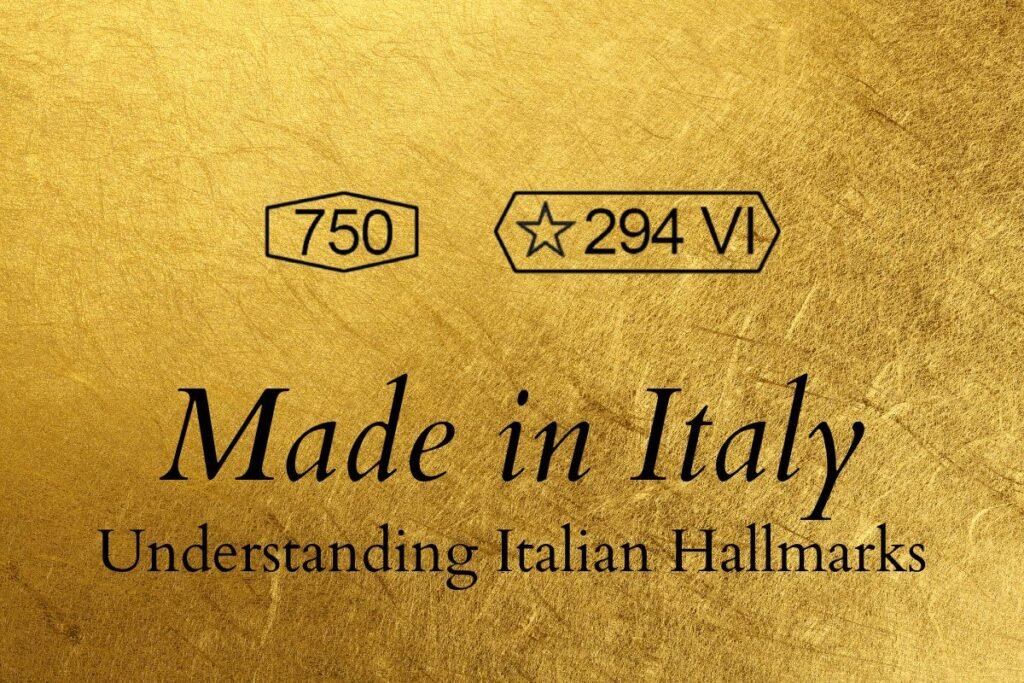
Why our Jewellery is Made in Italy: Understanding Italian Hallmarks
A regulated system of traceability, accountability, and industrial continuity
Italian jewelry is often discussed in terms of design language, regional style, or artisanal tradition. These aspects are visible and easily communicated. Less visible, but far more decisive, is the regulatory system that governs how precious metal objects are produced, identified, and controlled.
At the center of this system are Italian hallmarks.
They are not branding elements. They are not aesthetic choices. They are legal instruments that connect an object to a registered manufacturer, a defined geographic location, and a regulated moment in time. For contemporary consumers, they provide verifiable information. For historians and professionals, they function as archival records.
This article explains how the Italian hallmark system works, when it was established, how to read it, and why it continues to distinguish Italian jewelry manufacturing within the global industry.
Historical framework and legal foundation
Forms of precious metal marking existed in Italy long before national unification, often regulated locally by guilds or city authorities. These early marks were primarily concerned with metal purity and fraud prevention. They lacked uniformity and offered limited traceability across regions.
The modern Italian hallmark system was formally established in 1934 through Royal Decree No. 305. Its purpose was to create a centralized, legally enforceable framework that could support a growing national jewelry industry while protecting both domestic and international buyers.
This decree introduced compulsory registration for manufacturers working in precious metals. Each registered entity became legally identifiable. The system was not optional and was backed by state enforcement.
In 1968, the hallmarking framework was revised. The most significant change was the introduction of the five-pointed star, which remains a defining feature of Italian hallmarks today. From this point onward, all newly registered manufacturers were marked under a unified national format.
The structure of the Italian hallmark
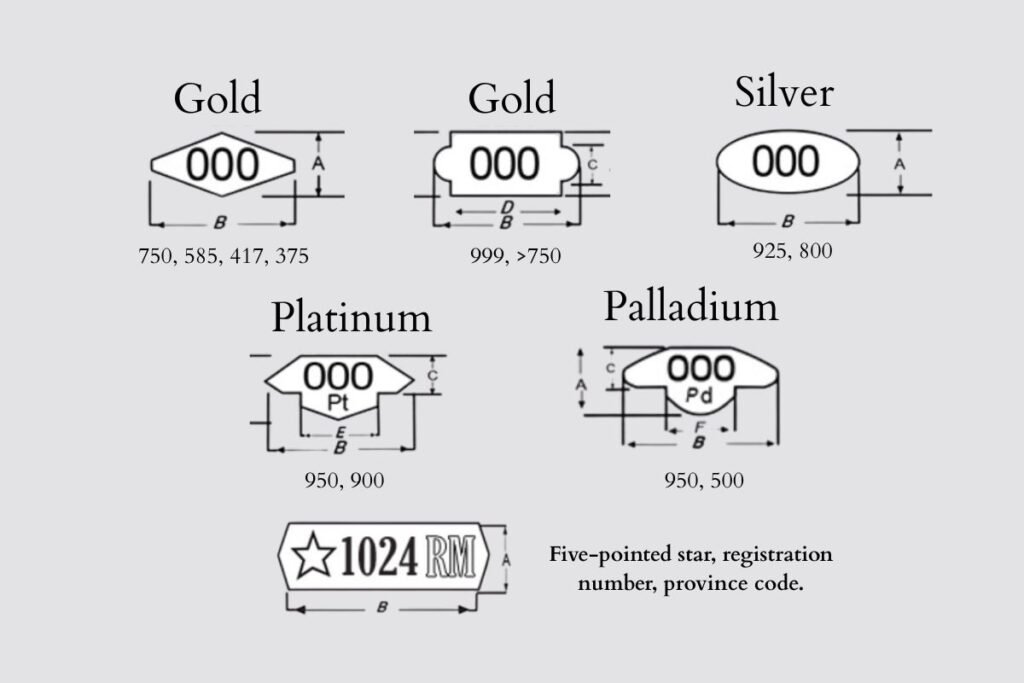
Italian hallmarks follow a standardized structure composed of three elements. These elements must be read together, as each contributes distinct information.
The five-pointed star
The star indicates that the manufacturer is registered under the post-1968 system. Its presence confirms that the object was produced after that date by a legally recognized entity. Pieces made before 1968 do not carry the star.
The registration number
Each manufacturer receives a unique numerical identifier at the time of registration. This number is assigned by the Italian assay authorities and does not repeat within the same province. It allows the piece to be traced back to the original registered workshop, even if that workshop has since closed.
The province code
Two letters indicate the province in which the manufacturer is registered. This reflects the legal location of production rather than stylistic influence. Common codes include VI (Vicenza), AR (Arezzo), MI (Milan), and TO (Turin).
A complete hallmark therefore appears in the following format:
★ 1234 VI
This identifies a specific manufacturer, registered in Vicenza, operating under the post-1968 regulatory framework.
Fineness marks and material control
Separate from the manufacturer hallmark, Italian jewelry also carries a fineness mark indicating metal purity. These numerical stamps follow internationally recognized standards and are legally defined within the Italian assay system for precious metals:
- 999 for 24-karat gold
- 750 for 18-karat gold
- 585 for 14-karat gold
- 417 for 10-karat gold
- 375 for 9-karat gold
- 950 for platinum
- 500 or 950 for palladium
- 925 for sterling silver
Each fineness mark corresponds to a legally defined minimum precious-metal content expressed in parts per thousand. The mark must accurately reflect the alloy used and is subject to verification by Italian assay authorities.
Platinum and palladium were formally incorporated into the Italian hallmarking system later than gold and silver, following international standardization. Their inclusion reflects the evolution of fine jewelry materials and the need to regulate high-value white metals with the same rigor applied to gold.
As with gold and silver, platinum and palladium objects must be produced by registered manufacturers and stamped accordingly. Misrepresentation of fineness, incorrect stamping, or use of marks without proper registration constitutes a legal offense rather than a technical irregularity.
The coexistence of fineness marks and manufacturer identification establishes a dual-layer control system: one layer defines material composition, the other assigns legal responsibility. This structure applies uniformly across all precious metals recognized under Italian law and forms the foundation of the Italian hallmarking framework.
Accountability and enforcement
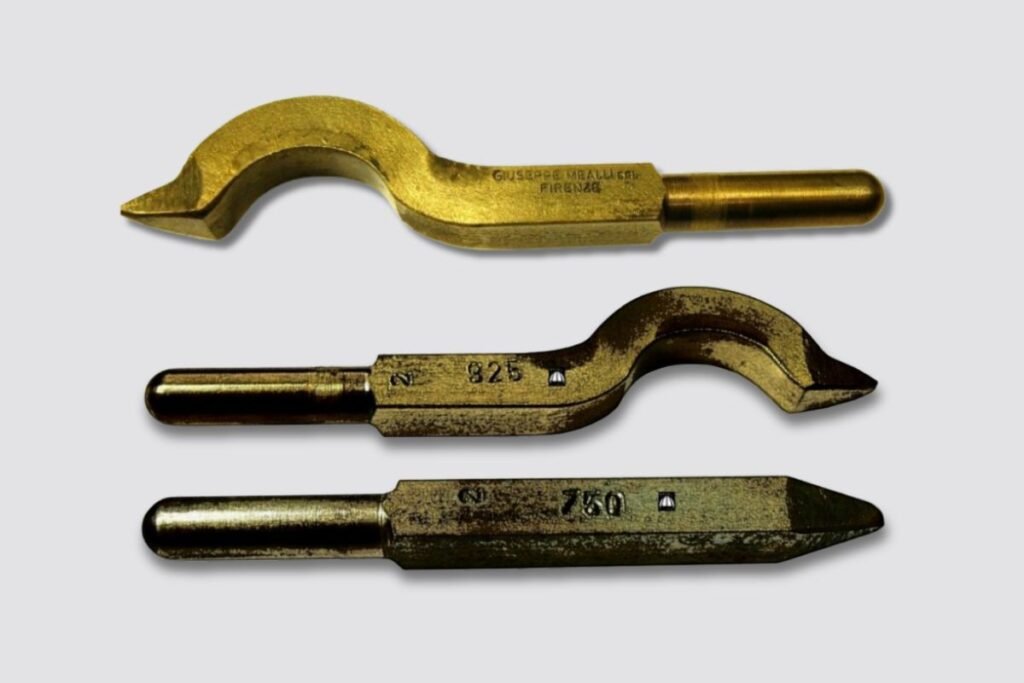
Italian hallmarking operates within a framework of legal accountability. Registration binds manufacturers to compliance obligations. Misuse of hallmarks, false declarations, or unregistered production can result in penalties, including fines and loss of registration.
This enforcement structure has shaped the behavior of the industry over time. Manufacturers work within defined tolerances and documentation requirements. The system prioritizes consistency and traceability rather than individual branding or stylistic claims.
As a result, Italian jewelry manufacturing developed around repeatable standards rather than isolated excellence.
Implications for vintage jewelry
For vintage jewelry, Italian hallmarks serve as chronological and geographic markers. The presence or absence of the star alone establishes whether a piece was made before or after 1968. Province codes and registration numbers allow further narrowing of origin.
Unlike stylistic dating, which relies on interpretation, hallmarks provide fixed reference points. They are especially valuable when documentation has been lost or when attribution is uncertain.
This makes Italian jewelry comparatively transparent within the secondary market.
Relevance for contemporary consumers
Modern consumers are often asked to rely on brand narratives, certificates, or external documentation to assess quality and origin. These materials can be separated from the object or rendered meaningless over time.
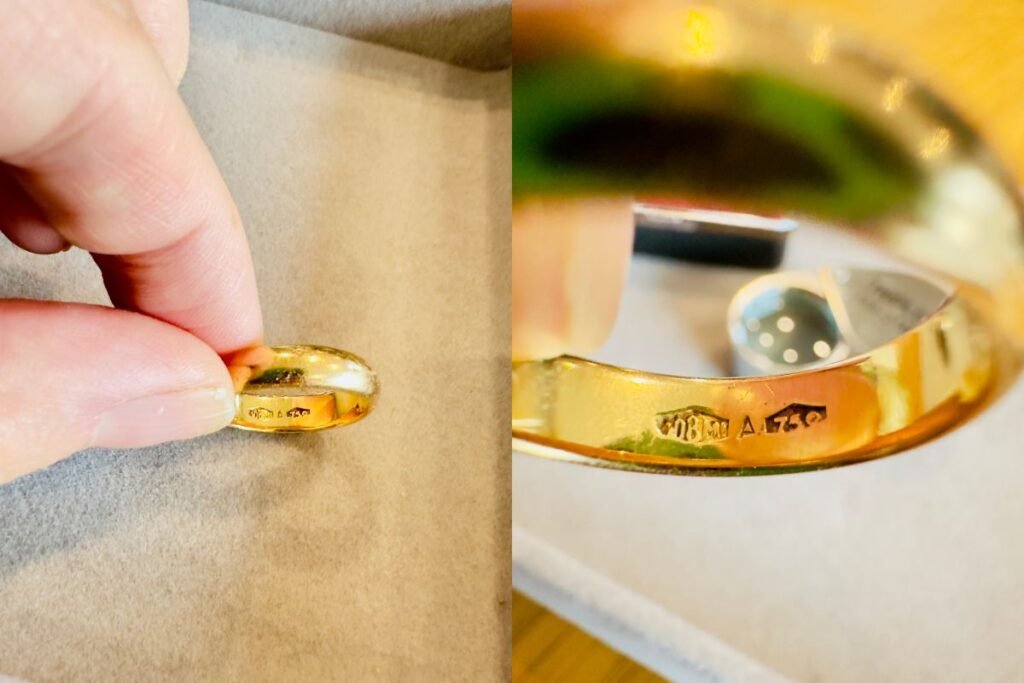
Italian hallmarks operate differently. The information is permanently embedded in the metal. It cannot be removed without altering the object itself. The hallmark remains legible across decades, independent of packaging or paperwork.
For contemporary production, this means that responsibility is clearly assigned. A registered manufacturer stands behind the object at the moment it enters the market.
Manufacturing choice and industrial rationale
Choosing to manufacture jewelry in Italy is not a stylistic decision. It is a structural one.
The Italian hallmark system imposes obligations that many producing countries do not require. It demands registration, verification, and accountability. These requirements increase production discipline and reduce ambiguity for both makers and buyers.
This is why Italian manufacturing maintains credibility across different market segments. The system does not guarantee design merit or aesthetic value. It guarantees that the object can be identified, verified, and contextualized within a regulated framework.
Conclusion: why we are proudly Made in Italy.
Italian hallmarks are not expressions of tradition in a symbolic sense. They are instruments of continuity and control.
They ensure that precious metal objects remain legible beyond the moment of purchase. They bind jewelry to a defined place of manufacture, to a registered maker, and to a legal framework that governs material accuracy and accountability. They allow a piece to be verified rather than interpreted.
For this reason, our brand has chosen to manufacture exclusively in Italy.
This decision is not aesthetic. It is structural. Producing under the Italian hallmarking system means that every piece we create enters the world with traceable responsibility, regulated material standards, and a permanent record stamped into the metal itself. These are not claims we ask our clients to trust. They are facts that can be read.
In an industry often shaped by narrative and suggestion, Italian manufacturing provides something more durable: certainty. That certainty is the guarantee we choose to offer our customers—quietly, consistently, and without compromise.