
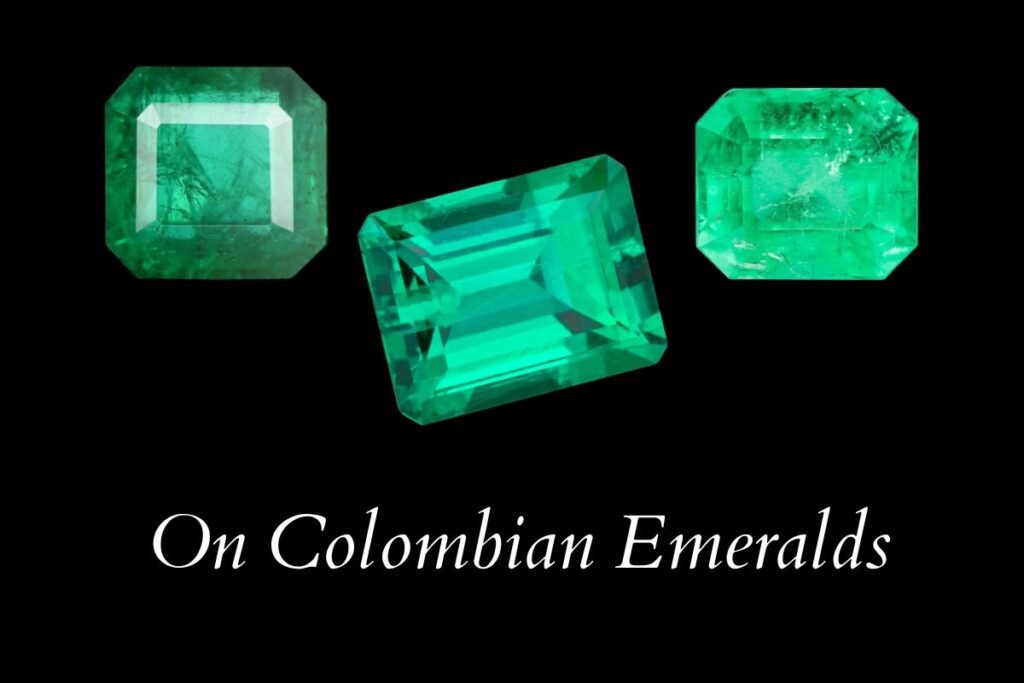
On Colombian emeralds
I’ve never been a great fan of emeralds.
That usually surprises people.
They are fragile. Unstable. They break when you least expect it. They demand constant caution in setting, wearing, and even cleaning. From a purely practical point of view, emeralds are inconvenient stones. I prefer materials that can take pressure without negotiating.
And yet, emeralds have always pulled me back.
Not because of their colour alone, and certainly not because of perfection. What keeps my attention is what happens inside them. The inclusions. The internal structure. The so-called jardin that most buyers are taught to tolerate rather than understand.
That internal landscape is why emeralds occupy a very specific place in my work and in my mind. They feel less like finished objects and more like records. You don’t look at an emerald once. You read it, slowly, knowing it will never fully resolve.
Where Colombian emeralds come from
Colombian emeralds form in conditions that are geologically unusual. Unlike many emerald deposits around the world, they are not associated with granite or pegmatite systems. They form in sedimentary rocks — black shales and limestones — along fault zones where hydrothermal fluids moved through fractures over long periods of time.
Those fluids carried beryllium. The surrounding rocks already contained chromium and vanadium. Where they met, emerald crystals formed.
This matters because it explains almost everything that defines a Colombian emerald: the colour, the internal features, the way inclusions distribute themselves rather than concentrating in a single zone.
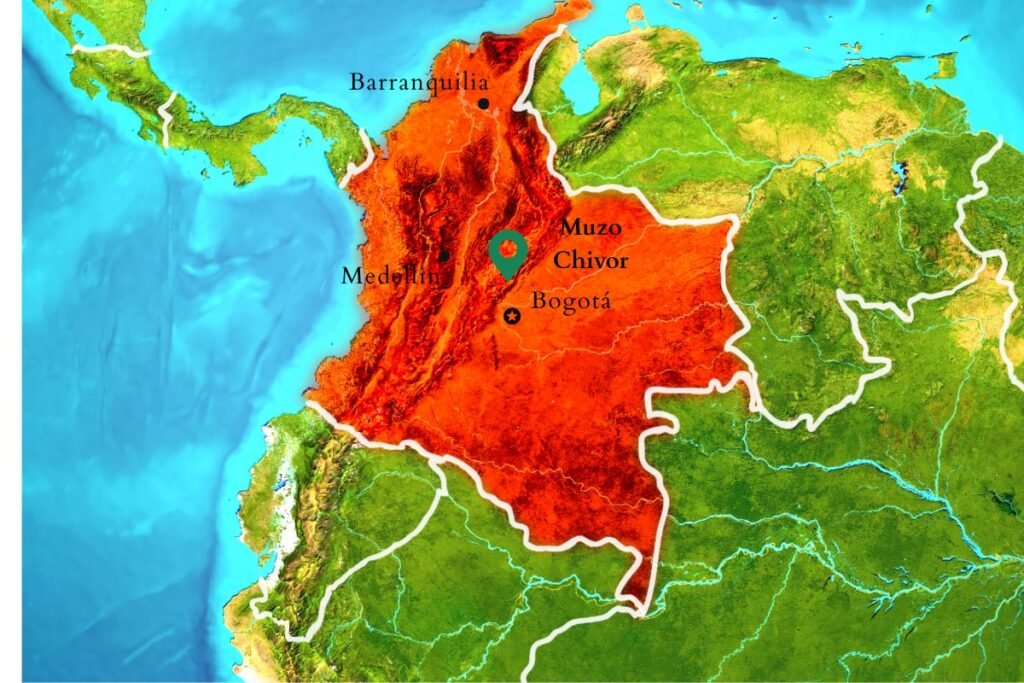
The historic mining areas of Muzo, Chivor, and Coscuez lie along the Eastern Cordillera of the Andes. They are geographically close, but they do not produce identical material.
Muzo emeralds often show strong saturation and a slightly warmer green. Chivor stones tend to lean cooler, with more blue, often appearing more transparent. Coscuez material frequently combines intensity with a very complex internal structure.
These are tendencies, not labels you can rely on blindly. Real origin determination happens through laboratory analysis, not intuition. Still, experience teaches you when a stone behaves as expected — and when it doesn’t.
How emeralds are extracted in Colombia
Emerald mining in Colombia is not gentle, but it is careful.
Tunnels are cut into mountains following mineralised zones that are often narrow and unpredictable. Emeralds do not form in continuous veins. They appear in pockets that can disappear just as suddenly as they are found.
The stone is vulnerable the moment it is exposed. Emerald hardness is misleading. It resists abrasion, but it does not tolerate shock well. Internal fissures already exist inside most crystals. Mechanical stress can extend them immediately.
That is why rough emerald is handled conservatively. Excessive washing, pressure, or aggressive lighting can do irreversible damage. Sorting is often done with restraint, not because miners are sentimental, but because experience has taught them what ruins value.
Emeralds don’t reward haste at any stage.
What defines a Colombian emerald beyond colour
Colour is the first thing people talk about, but it is not the first thing I evaluate.
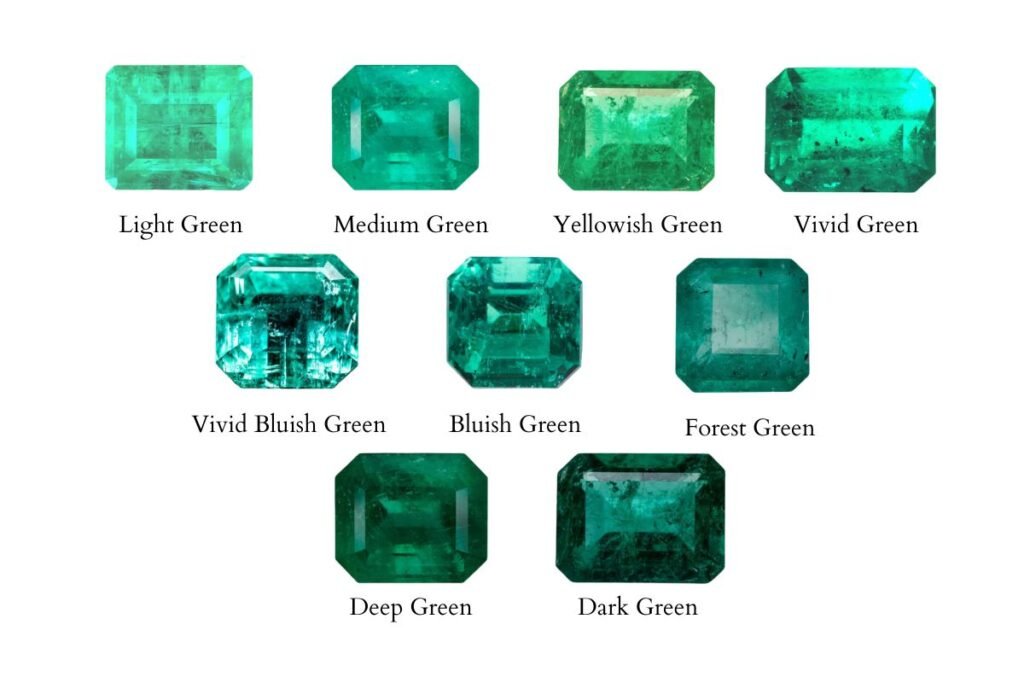
Colombian emerald colour comes primarily from chromium, sometimes reinforced by vanadium. The most desirable stones show a green that is saturated but not heavy, with a subtle blue component rather than yellow dominance.
But colour only works if the stone can carry it.
Transparency matters more than clarity. I look at how light travels through the crystal. Whether it moves cleanly or fractures into dull reflections. A stone can be included and still transparent. It can also be clean and lifeless.
Then comes structure. How inclusions are distributed. Whether they follow growth patterns or interrupt them violently.
This is where emeralds separate themselves from almost every other gem species.
Inclusions and the meaning of jardin
Emerald inclusions are not something I try to ignore. They are the reason I pay attention.
Three-phase inclusions — a liquid, a gas bubble, and a solid crystal within the same cavity — are particularly important. They form during crystal growth and are strongly associated with emeralds from Colombian sedimentary deposits.
When I see them under magnification, they give context. They tell me about formation conditions, temperature, and environment. They help confirm that the stone’s story makes geological sense.
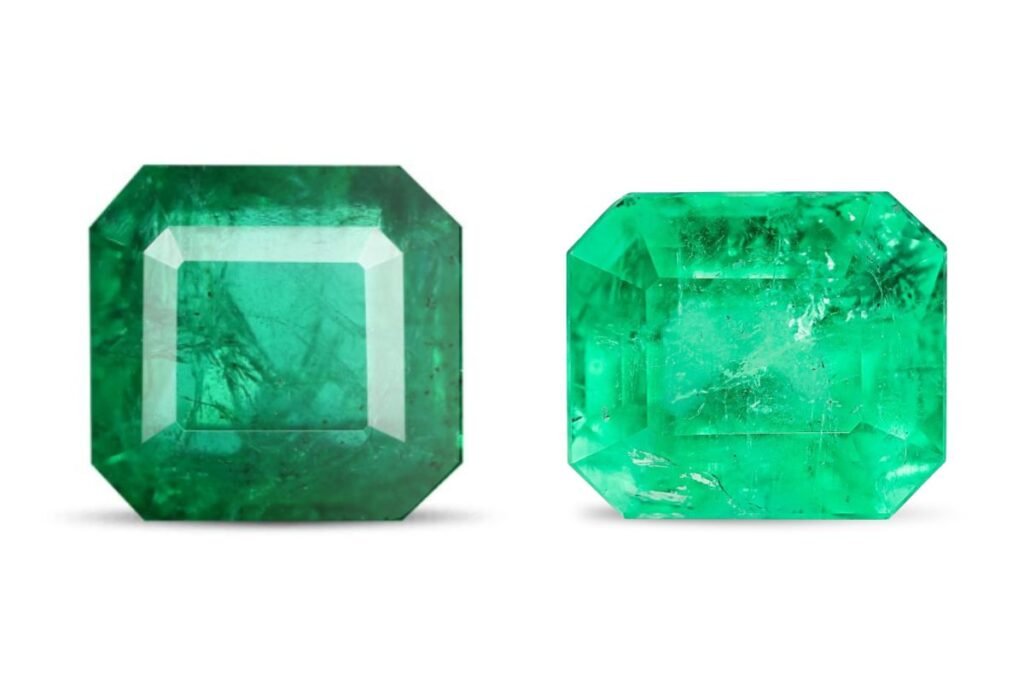
Other inclusions appear as healed fissures, fine needles, growth tubes, or clustered internal patterns. When these inclusions follow the internal logic of the crystal, they create what is often described as jardin. When they cut across it aggressively, they signal structural weakness.
The word jardin is descriptive, not scientific. It isn’t a laboratory term; it’s a way of describing what the eye sees under magnification.
In emerald, multiple natural inclusions — healed fissures, growth tubes, small crystals, fluid traces, sometimes even three-phase inclusions — can gather into something that looks layered and organic. That layered structure is what people call jardin. One fracture on its own is not jardin. One isolated inclusion isn’t either.
The term only makes sense when several internal features interact and create depth, structure, and movement inside the stone. In Colombian emeralds especially, this internal landscape often follows the crystal’s natural growth rather than slicing across it abruptly. When the inclusions feel integrated and consistent with the stone’s formation, the word fits. If what you’re seeing is a single open crack cutting through the body, that isn’t a garden. It’s simply a fissure.
Learning the difference takes time. Mostly because the market teaches buyers to accept everything as character. It isn’t. Some inclusions belong. Some don’t.
Treatment, without drama
Emerald treatment is not a scandal. It is a technical reality.
Most emeralds are oiled. Colourless oil is introduced into surface-reaching fissures to improve transparency. It does not add colour. It does not create material. It fills voids that already exist.
Traditional oils such as cedarwood oil are relatively unstable but reversible. They require yearly maintenance, but they are considered more acceptable. Modern fillers, including polymers and resins, are more stable but less forgiving if something goes wrong.
A Colombian emerald with minor traditional oil is normal. We only accept minor oil or no oil. A stone heavily filled with polymer is not in our interest.
Untreated Colombian emeralds exist, but they are rare, especially in larger sizes. A no-oil stone above a few carats with strong colour and good transparency is unusual enough that it should be approached with caution and verified carefully.
Treatment is identified through magnification, optical effects, and confirmed by laboratory analysis. Anyone offering certainty without testing is guessing.
Why Colombian emeralds became the reference
Part of the answer is historical. Colombian emeralds reached Europe early and became associated with royalty and religious power.
But history alone does not sustain dominance.
Colombian emeralds offer a balance that other origins struggle to achieve consistently. Depth without darkness. Saturation without harshness. Internal structure without collapse.
Zambian emeralds can be darker and cleaner. Brazilian stones can be lighter and more open. Afghan emeralds can be sharp and intense.
Colombian stones often sit between extremes. That tension is what makes them difficult and compelling.
Rarity in practical terms
Fine Colombian emeralds are genuinely scarce.
A stone over 3 carats with strong colour, good transparency, controlled inclusions, and minor oil is already uncommon. Above 5 carats, such stones become exceptional. Above 10 carats, they move into long-term collections rather than open market circulation.
Rarity compounds quickly. Improvements do not add value linearly; they multiply it. That is why emerald pricing feels inconsistent to those used to diamonds. It isn’t inconsistent. It’s cumulative.
Conclusion: On Choosing an Emerald
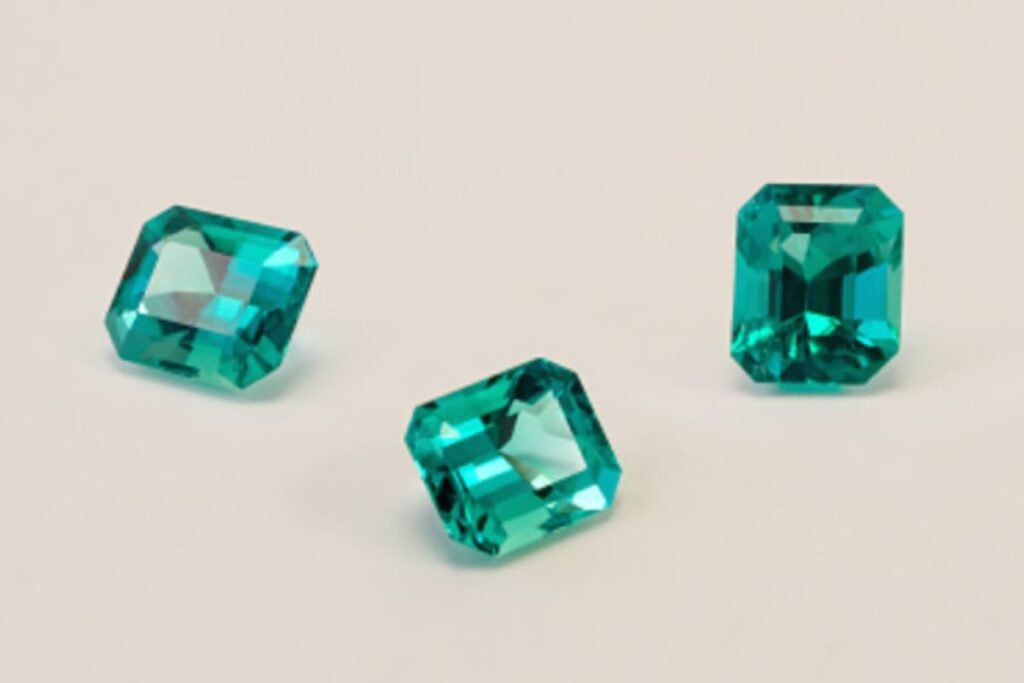
When I choose an emerald, I look for coherence. The colour has to belong to the crystal, in relationship with the wholeness of the stone, including the inclusions. The inclusions should follow its internal growth, not fight against it. Treatment must be proportionate, honest, and consistent with the stone’s condition. Certificates, origin, size — they all matter, but they don’t rescue a stone that feels unsettled inside. If something is off, you sense it immediately. When an emerald is right, the decision is quiet. There’s no need to convince yourself.
I don’t value emeralds because they are easy to work with. They aren’t. Their fragility forces discipline. Their inclusions make you slow down and really look. Their instability reminds you that strength and perfection are not the same thing. That layered internal garden — imperfect and complex — is what holds my attention. Not in spite of its fractures, but because they are part of its truth.