The Charm of Blue Zircon
Where ancient earth, human hands, and a forgotten brilliance meet in modern light.
I first met blue zircon not in a boutique, but in a small parcel a dealer unfolded for me at a gem fair. It was marketed as Cambolite. The stones were wrapped in newspaper — no velvet tray, no spotlight. That alone told me I was looking at something the market still keeps under the radar, a gem many collectors consider undervalued simply because it isn’t surrounded by noise.
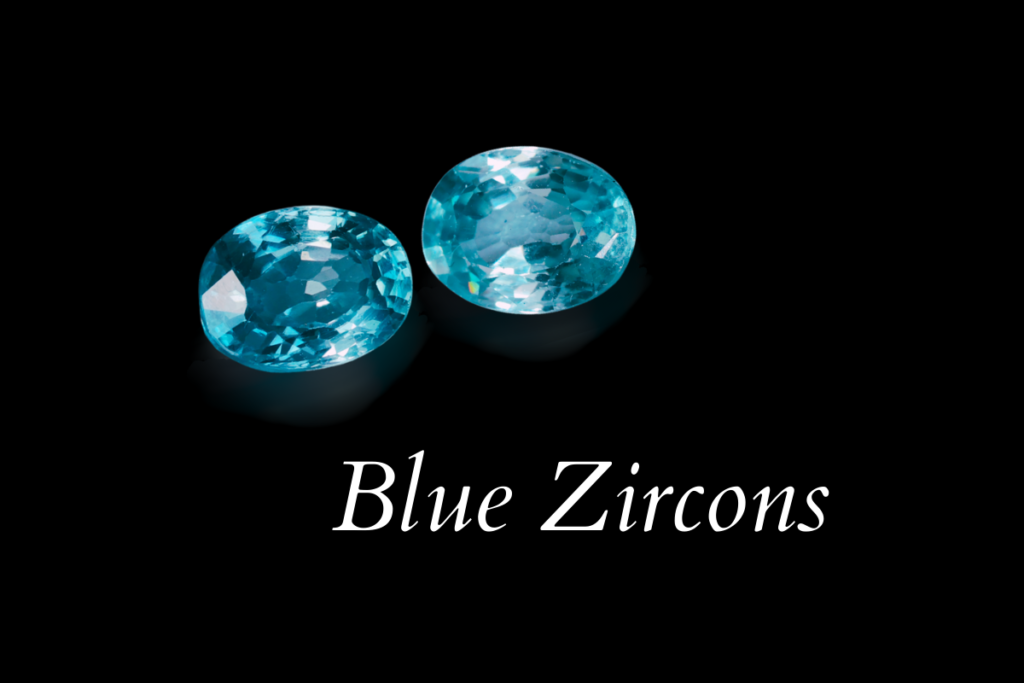
When the paper opened, the stones didn’t flare or fight for attention. They never do. Blue zircon reveals itself quietly, almost with intention. A charged, electric blue rose from inside each crystal — the kind of glow that makes you lean in before you even realize you’ve moved. At that moment, I felt how ancient the light was. Older than sapphire, older than topaz, older than our whole idea of what a “precious stone” should be. It was a reminder of why collectors keep searching: not for prestige, but for the thrill of finding brilliance where the world hasn’t looked yet.
Zircon is one of the oldest minerals on Earth. Some pieces unearthed in Western Australia date back over 4.3 billion years (GIA’s geological archives speak of this with almost reverence). Every time I hold a zircon, I think of that: the idea that this stone was forming when our planet was still molten, still imagining itself.
Yet blue zircon remains strangely overlooked. It lives in the shadow of its more famous blue cousins — sapphire, spinel, aquamarine — even though its brightness can feel almost otherworldly. If diamond is a star frozen in clarity, zircon is a comet: fast, luminous, directional. It doesn’t mimic anything. It has its own kind of fire — a double refracted brilliance that splits light into two paths inside the stone.
When cut well, that effect creates almost a trembling glow, a depth that moves as you move. Jewelers in the 19th century adored it. Collectors in the mid-20th century quietly hoarded it. Today, it’s rediscovered by those who want a gemstone with both history and presence — something that doesn’t shout, but resonates.
I’ve always been drawn to things that don’t clamor for attention, but reward the attentive eye. Blue zircon is exactly that.

The Roots of the Blue: Where Zircon Is Born
In gemology, origin matters less for prestige and more for understanding character. With zircon, the most vivid blues come from the same places where old volcanic activity once shaped the soil.
Ratanakiri, Cambodia — the benchmark
Blue zircon is often nicknamed Cambolite, a trade name that grew naturally from the gem’s most celebrated origin: Cambodia’s Ratanakiri province. Dealers began using the term to distinguish the vivid, electric blue stones mined there from softer hues found elsewhere. Over time, “Cambolite” became a shorthand in the trade — not a scientific term, but a way to signal that unmistakable Cambodian saturation and brightness collectors look for.
When GIA and IGS describe blue zircon, they nearly always speak of Ratanakiri. This northeastern region of Cambodia produces the stones that collectors instinctively associate with the color: a pure, saturated, almost neon cerulean.
Mining here isn’t industrial. It’s done by small artisanal communities — families and neighbors who work shallow pits during the dry season. The process is laborious: digging, sifting, washing gravels, examining each piece against sunlight. The community effort is as much cultural as it is economic; mining and trading are part of the region’s rhythm the same way fishing is for coastal villages.
The material from Ratanakiri often begins life brownish-red or reddish-orange. You wouldn’t guess, looking at the rough, that it contains the possibility of such blue. That transformation comes later, through heat — the same way fire hardens clay or tempers steel.
Myanmar, Sri Lanka, Tanzania, Madagascar
Other sources exist, though their blues are softer — sometimes pastel, sometimes leaning toward grey or green.
- Myanmar (Mogok region) yields zircon with silky tones, often cherished by cutters for its transparency and low inclusions.
- Sri Lanka produces honey, pastel, and pale blue zircon, often with exceptional clarity.
- Tanzanian and Madagascan zircon appear in small quantities, each region contributing its own subtle flavor of color.

Why Heat Matters: The Science Behind the Blue
The most common question people ask is whether blue zircon is “natural” if it has been heated.
The answer from GIA, SSEF, and every gemological authority is clear:
Yes. Blue zircon is natural. Heat is a traditional, accepted, permanent enhancement.
Most zircon is brown when it emerges from the earth. That brown color comes from trace amounts of uranium and thorium and the internal changes they cause over millions of years. When heated — usually between 800–1000°C — the crystal structure shifts slightly, allowing the brown to clear and the blue to appear.
Several things matter:
- Proper temperature
Too low, and the color doesn’t fully develop. Too high, and the stone can whiten or become brittle. - Cutting before or after heating
Some cutters prefer to heat rough. Others heat pre-forms. Each method gives a different final tone. - Stability
Heat-treated blue zircon is color stable. It doesn’t fade under normal wear or daylight.
Heat doesn’t improve everything. In fact, not every brown zircon becomes blue. Some turn colorless. Some turn pale. Some crack internally.
This unpredictability adds to its rarity — and its cost.
I’ve held parcels where only one in twenty stones emerged with that deep Cambodian blue. When that happens, you understand why collectors chase it.
Rarity and the Quiet Reality of Supply
Unlike sapphire or ruby, zircon isn’t mined in enormous volumes. Production rises and falls with the seasons, the local economy, and the conditions of artisanal mining.
What makes blue zircon specifically rare isn’t the mineral itself — zircon is common in geology — but the combination of:
- Clean rough suitable for faceting
- The right chemical composition for blue color development
- Skillful heating without damage
- Artisanal supply chains with no industrial buffering
- Growing demand from designers and collectors
Ratanakiri production also fluctuates. The region has experienced political and environmental challenges, and many mines are shallow, meaning they can be depleted or paused quickly.
When you see fine blue zircon in the market — especially over 5 carats, perfectly cut, with that neon hue — you’re looking at a gemstone that had to survive a series of unlikely thresholds. That alone gives it a kind of silent nobility.
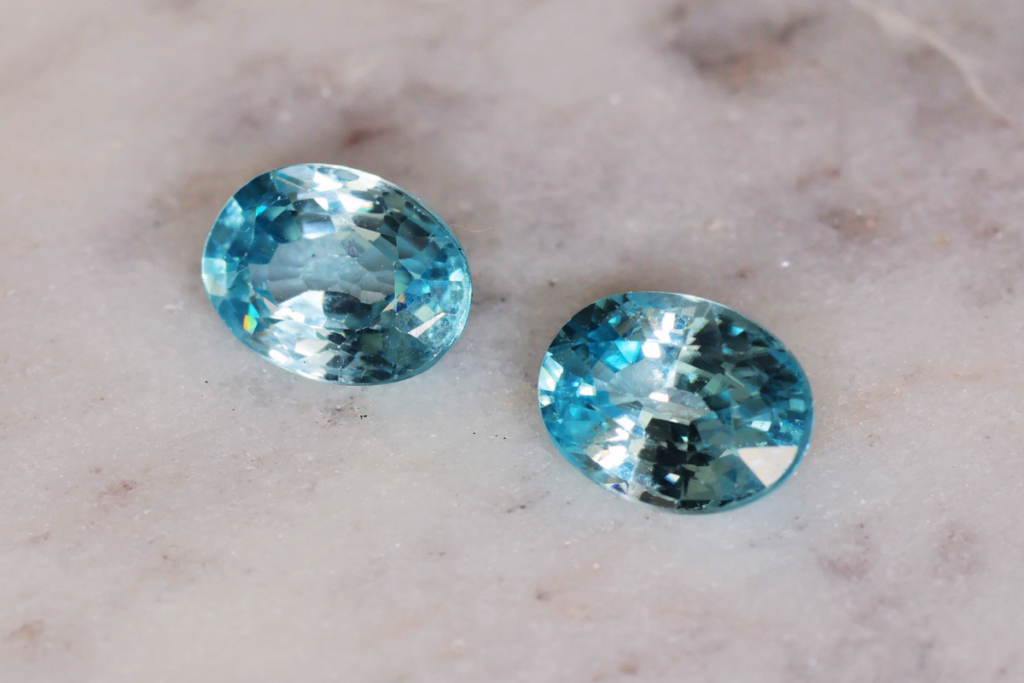
Sourcing Blue Zircon: What I Look For
People often assume sourcing begins with dealers. For me, it begins with light.
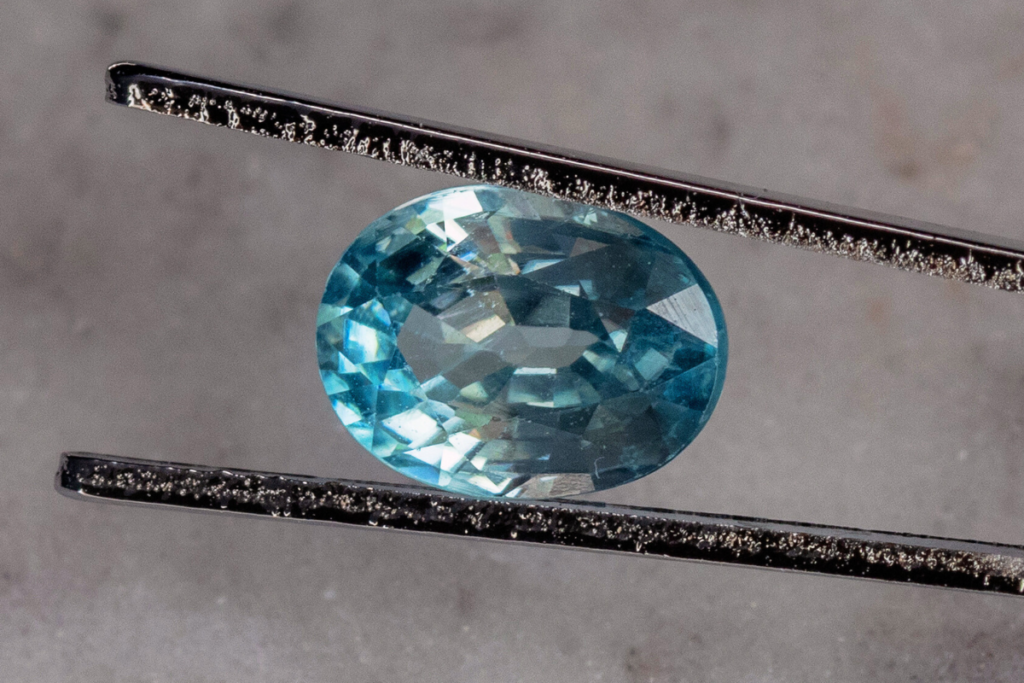
Zircon can carry a density of brilliance that overwhelms its own color if cut poorly. It also has a high refractive index, double refraction, and a brittleness that demands skill. So when I source blue zircon, I look at it in three kinds of light: soft morning indoor light, diffuse daylight, and directional beam. Zircon changes with each — not dramatically, but enough to reveal its personality.
Here’s what guides my hand:
Color
The most prized blue zircon shows a vivid, medium to medium-deep blue. True “Cambodian blue” tends toward a slightly greenish or pure electric tone — but never greyish, never washed out.
Over-dark stones exist, but their beauty flattens in low light.
Clarity
Zircon is often very clean. The finest stones show no distracting inclusions under the eye.
Under magnification, I look for internal strain, cracks from heat treatment, or structural instability.
Because zircon is brittle, these details matter.
Cut
A poorly cut zircon loses half its life. A well-cut zircon radiates.
Zircon needs crisp facet junctions, symmetrical pavilion angles, and a crown that isn’t too shallow.
I favor cuts that enhance its inner brightness without making it look chaotic.
Birefringence
This is the “double image” effect — if you look closely at the back facets, you’ll often see a doubled line. I don’t try to hide it. It’s part of zircon’s identity.
But I look for stones where this optical effect feels like shimmer, not blur.
Carat Weight
Stones over 5 carats with saturated color are significantly rarer. Over 10 carats, they enter a different world. They command attention the way rare blue spinels or fine tourmalines do.
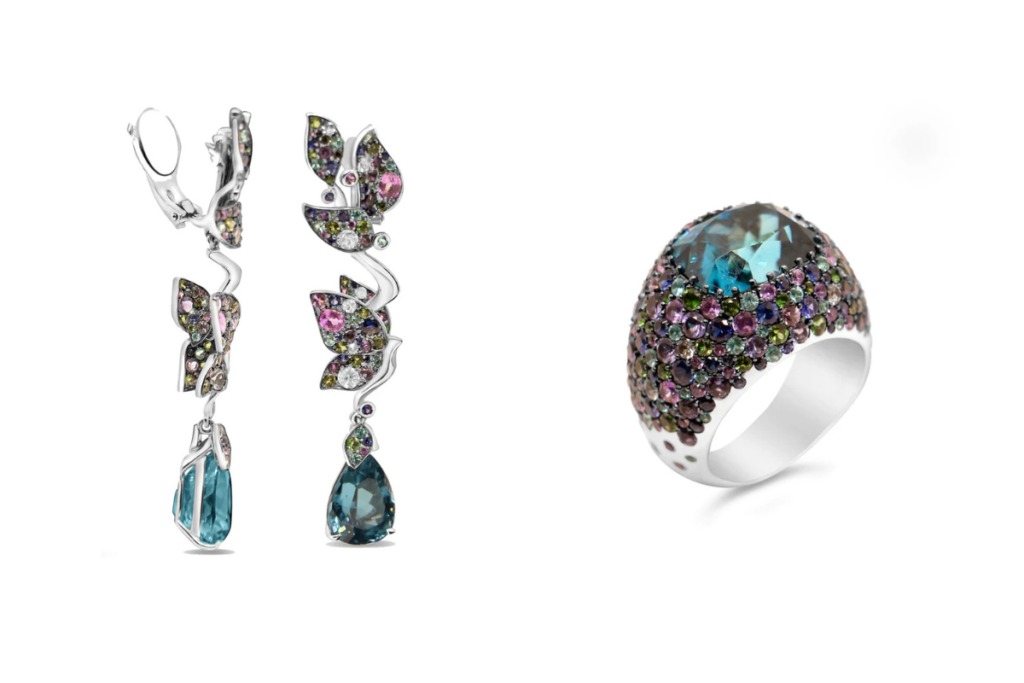
The Reflection It Leaves
Every gemstone teaches something. Zircon teaches patience and quite luxury. It teaches observation and that you can leave a good impression even when flying under the radar. It teaches that brilliance can be quiet and still be unmistakable.
And maybe that’s the true beauty of blue zircon:
It doesn’t try to impress, yet it does.
It simply shines without thinking about what the world thinks.