The Light of Mahenge Spinel
A meditation on color, rarity, and the quiet power of a gem that steals hearts.
The first time I encountered a Mahenge spinel, I felt something I still struggle to put into words. It wasn’t admiration. It wasn’t excitement. It was recognition—like meeting a color I had been waiting for without knowing it. The stone lay on a simple sheet of white paper, nothing dramatic, yet the brightness rising from its surface felt almost theatrical. Not loud, not artificial—just astonishingly pure.
Mahenge spinel has a way of catching light that’s unlike anything else in the gem world. Other stones glow, some shimmer, a few even hum under the right conditions. But Mahenge? It radiates. The light doesn’t sit on the surface; it travels through the crystal and comes back with more intensity than it went in with. Almost as if the gem edits the light, removing anything unnecessary and returning only the essence.
I tilted that first stone very slightly—barely a gesture—and the color leapt. A vivid, electric pink that didn’t fade at the edges or collapse in shadow. It held its strength from every angle, almost defying the logic of how light should behave inside a crystal. Every collector I know remembers their own first moment with Mahenge spinel, because that brightness rewrites your expectations. After that, every ruby, every sapphire, every traditional “precious” pink feels softer, quieter, almost cautious.
There is no gemstone with equal charm. Not for me. Not for anyone who has seen true Mahenge material. Its brightness is not simple saturation—it’s personality. A kind of confidence you feel before your mind even identifies the color. Some stones are technically fine, well-cut, clean, valuable. Mahenge spinel goes beyond that. It has presence.
As a collector, I look for that presence before anything else. I hold the gem near a window and let natural light decide the truth. A fine Mahenge stone answers instantly—it ignites without asking for permission. It doesn’t rely on perfect clarity or strict symmetry to be extraordinary. Its beauty is more instinctive, more immediate. It commands attention the moment you hold it, and in that instant you understand why collectors across the world speak about it almost with worship.
Some gems impress.
Mahenge spinel moves you.
And once you’ve seen that brightness—the unmistakable neon lift that feels almost alive—you can never go back to a world where pink gemstones all look the same. You start to crave that character, that inner fire. You find yourself chasing light, not just color.
That is the allure of Mahenge. Its charm isn’t decorative; it’s transformative. It doesn’t just shine.
It awakens.

Where the fire began
Mahenge sits in the Ulanga District of Tanzania, a region of rolling hills and deep red earth. In 2007, when miners struck that now-legendary pocket, they didn’t know they were about to change the gemstone world. Reports from the ground — later confirmed by gemologists and traders — described material so vivid it seemed almost unreal: hot pinks, neon reddish hues, and a clarity that looked lit from within.
GIA and SSEF analyses later attributed this luminosity to a mix of chromium and iron in unusually harmonious proportions. In simpler terms: nature found the perfect recipe, and it only happened once, in one place.
The original deposit produced material for a brief moment in time. The later secondary finds offered beauty, but never quite the same electric flame. This is why early Mahenge material is now spoken of in almost reverent tones. It’s a geological accident that will not repeat itself — the kind of accident collectors dream about.
The color that changed everything
When people talk about Mahenge spinel, they often say “vivid pink,” but that phrase is misleading. Its palette is more complex, more textured, and far more alive.
I’d describe the spectrum like this:
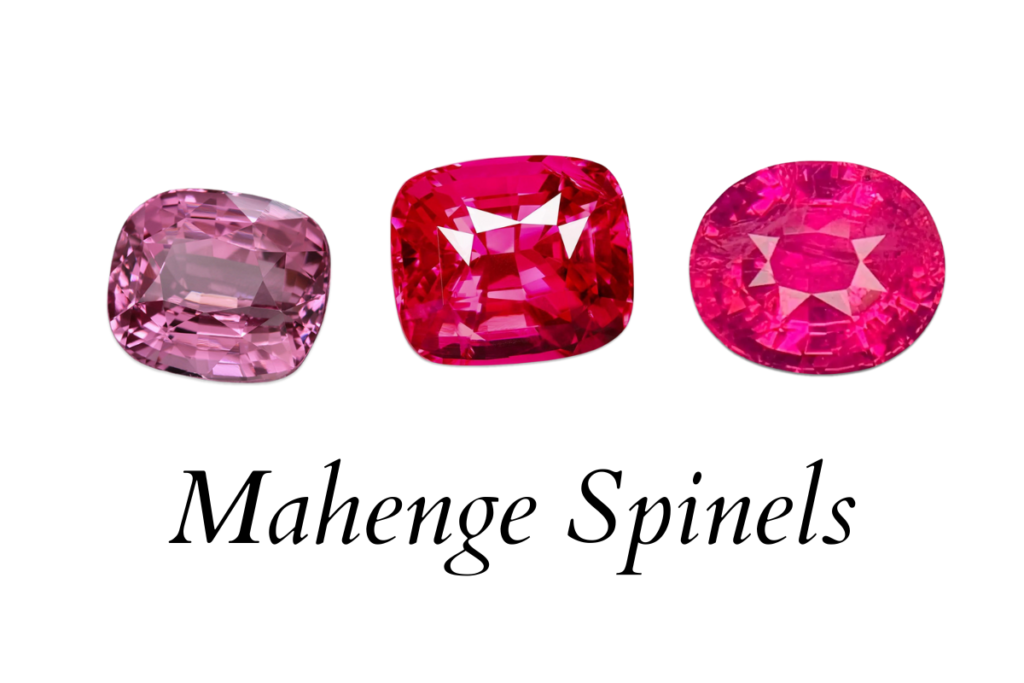
- Pure hot pink — the classic, the heartbeat of Mahenge, the tone that made the world pay attention.
- Pink-red — slightly warmer, with a flame-like inner glow, highly desirable when clean and bright.
- Fuchsia or magenta — deeper but still neon, full of movement under natural light.
- Pastel Mahenge pink — softer but still luminous, often cleaner in larger sizes.
What I love about Mahenge color is its energy. It doesn’t sit quietly. It pushes forward. It has immediacy — a presence you feel before you think.
And yes: the pure hot pink–to–pink-red stones remain the most coveted, especially when they combine fine clarity with that neon quality that almost vibrates. These are the stones collectors chase. These are the stones that move markets.
On Cut and the Quiet Art of Recutting Mahenge Spinel
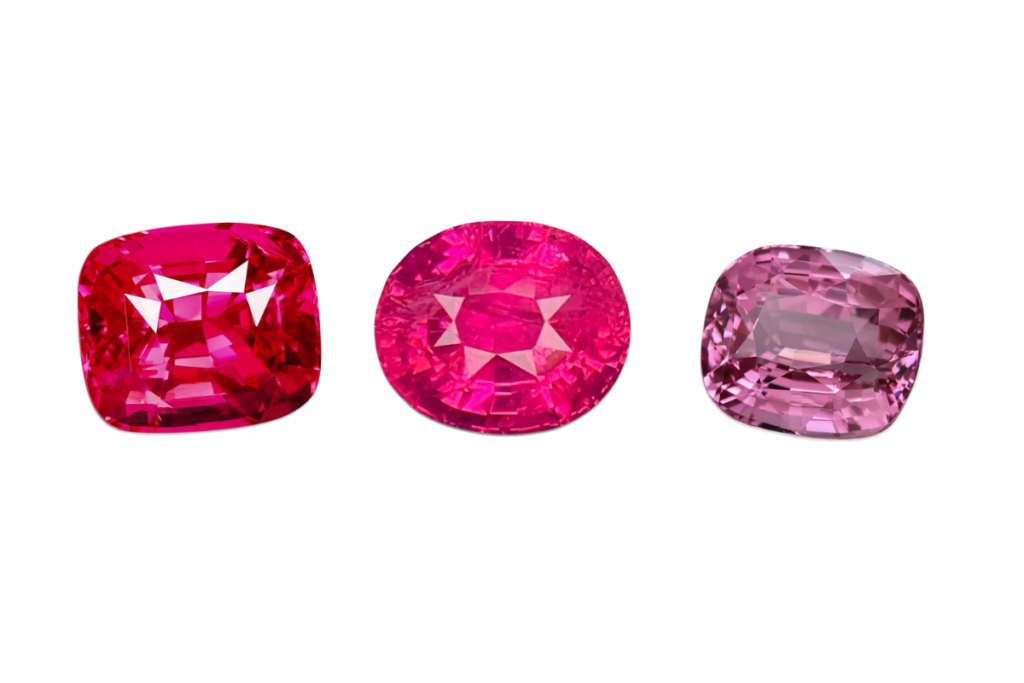
One truth every collector learns early with Mahenge spinel is this: the first cut you see is rarely the cut the gem deserves. Most stones are shaped where they’re found, often by cutters who prioritize weight over beauty. You’ll see cushions with heavy bellies, ovals with stiff proportions, windows that dilute the fire. Nothing unusual—just the reality of the trade. When rough is scarce, nobody wants to lose a single point of carat weight.
But Mahenge spinel has a brightness that punishes a mediocre cut. Its neon energy is too intense to hide behind extra depth or broad windows. It wants to open. It wants movement. So the best stones almost always pass through a second pair of hands—a precision cutter who understands the difference between meeting the numbers and releasing the light.
Recutting is a quiet art in our industry, often invisible to the final buyer but essential to the gem’s performance. I’ve seen stones lose 10, even 20 percent of their weight and still gain value because the recut freed the saturation that had been trapped inside. Suddenly the stone breathes. The light travels cleanly. The color sharpens and settles into its full identity.
This is why, when I source Mahenge material, I look past the initial cut and imagine what the stone could become. A slightly windowed oval might transform into a tight, brilliant cushion. An overdeep pear may reveal perfect symmetry once excess mass is removed. The key is to see potential—not just polish.
Every serious collector knows that fine rough is finite, but fine cutting is limitless. A great recut doesn’t change the soul of a Mahenge spinel; it reveals it. And when that neon glow finally meets a clean, intelligent faceting pattern, the gem steps into its true form.
That is when you know you’re holding something exceptional.
Treatments — or rather, the lack of them
One of the quiet triumphs of Mahenge spinel is that it’s typically untreated.
Spinel in general resists the pressure of commercial “improvement,” and Mahenge is no exception.
No heat.
No diffusion.
No surface enhancements.
Just the stone — exactly as it left the earth.
For a collector, this matters. An untreated gem carries a kind of purity. It holds its value with more integrity, and its emotional pull is deeper. When I buy Mahenge spinel, I buy it knowing that what I see is true. There’s relief in that.
Rarity — the kind you feel, not the kind you read about
Gem dealers often overuse the word “rare,” but with Mahenge, it’s literal. The 2007 pocket was mined out quickly. The later finds were smaller, less consistent, and lacked the neon intensity that defined the original material.
Large stones are exceptionally scarce.
Fine clarity is scarce.
Neon saturation is scarce.
A stone that combines all three? Practically mythical now.
When I evaluate Mahenge parcels today, I sometimes catch myself thinking: If only I had bought more when they were still flowing. I hear the same from brokers around the world. There is a quiet nostalgia in the trade — the sense of a moment passed.
That emotion is part of the gem’s market story. Scarcity shapes desire. Desire shapes value.
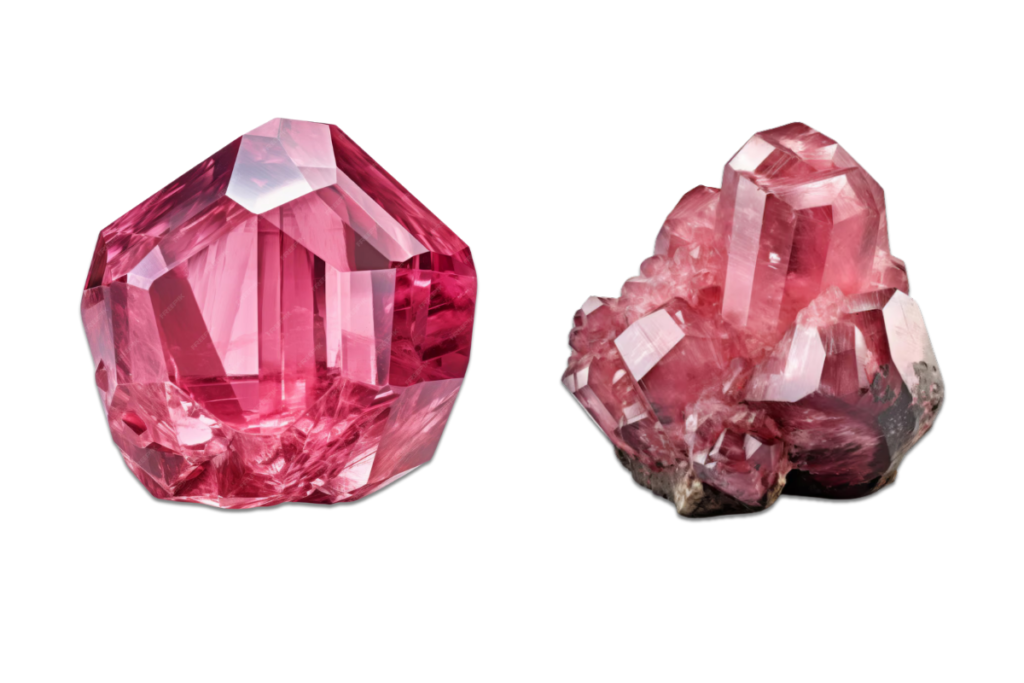
What I look for when I buy Mahenge spinel
Every gem has its own logic, its own hierarchy of beauty. With Mahenge, the order is clear in my mind.
1. Color first — always color.
The finest Mahenge stones pulse with brightness even in soft light. They don’t fade when the sun shifts. They don’t collapse under LED.
Pure hot pink is the queen of the color range.
Pink-red with neon intensity is its fierce sibling.
Magenta can be extraordinary when clean.
Pale tones shine when the crystal is exceptional.
I test every stone in daylight before anything else — preferably morning or late afternoon light, where honesty lives.
2. Clarity that lets the color breathe.
Spinel often forms with fewer inclusions than ruby or sapphire, but Mahenge is an exception: the neon stones sometimes come with small crystals or fine needles.
I accept minor inclusions if they don’t disturb the glow.
A vivid Mahenge can tolerate them. A weaker one cannot.
3. Cut that respects the stone, not fashion.
I prefer cuts that open the stone — brilliant cushions, ovals with clean symmetry, or rounds with generous windows of light.
Mahenge suffers when cut too deep or when windows are tight.
The gem should feel lit from inside, not trapped.
4. Size — the quiet luxury.
Anything above 2–3 carats with top color is already in the realm of collectors.
Above 5 carats… you’re in legend territory.
5. Origin confirmation
When I invest, I want a report from GIA, SSEF, or another respected lab indicating “Tanzania (Mahenge).”
Not because origin makes a stone beautiful, but because it completes the story and secures long-term market stability.
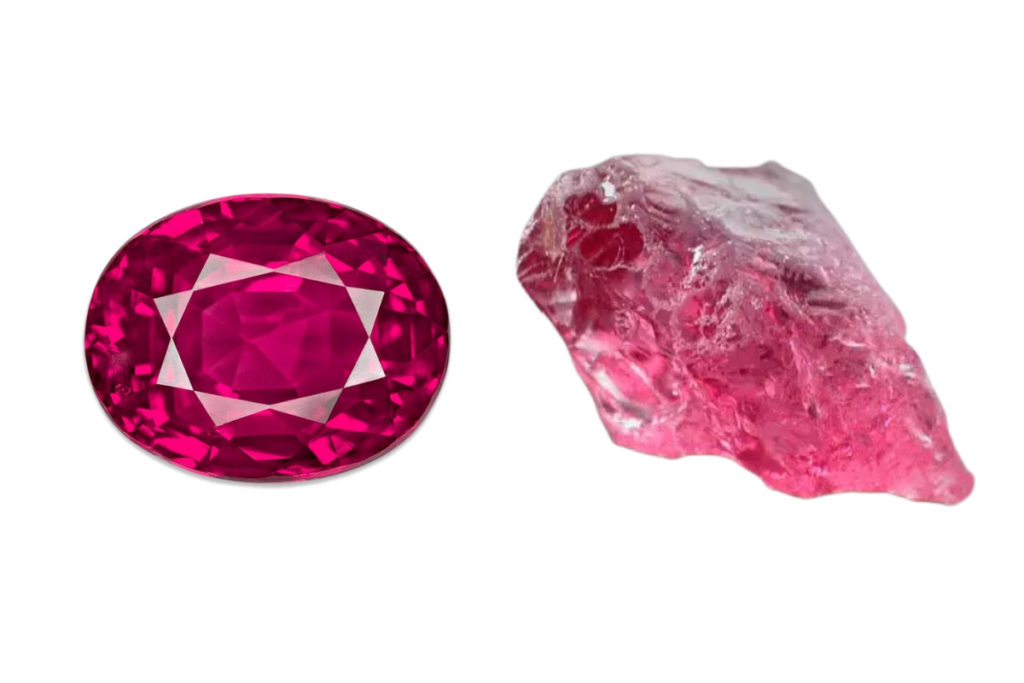
Sourcing Mahenge spinel today — the reality
Buying Mahenge in 2025 is not like buying it in 2008 or 2010. You don’t sift through piles of electric pink. You hunt. You wait. You negotiate with dealers who know exactly what they’re holding.
Here’s what sourcing feels like:
- You start with relationships — the few brokers who still see original material.
- You expect to reject 99% of what you’re shown.
- You stay patient because true Mahenge quality is almost always sold quietly, to repeat buyers.
- You understand that fine stones will not get cheaper — ever.
Sometimes I’m offered stones labeled “Mahenge” that are simply bright East African pinks. Nice, but not the same energy. The real ones have a signature that’s impossible to fake: the fluorescence, the sharp saturation, the feeling of light under pressure.
If you’ve seen true Mahenge once, your eye remembers it.
It becomes your internal compass.
Value, investment, and the quiet upward curve
Collectors often ask me where Mahenge spinel is heading. My honest response: upward. Not in wild leaps, but in a measured, steady rise driven by three unchanging facts.
1. The supply is gone.
The original pocket is closed.
The later finds cannot match it.
This alone establishes a permanent scarcity.
2. Demand is global — and growing.
High jewelry maisons embrace Mahenge because it offers the intensity of ruby with the clarity and luminosity ruby rarely has.
Private collectors chase it because it offers rarity without treatment.
Designers like me choose it because it doesn’t hide. It performs.
3. Color has become the new currency.
In the modern gemstone market, saturation and purity of hue drive demand more than size. Mahenge delivers this effortlessly.
What I tell clients is simple:
A fine Mahenge stone bought today will feel like foresight tomorrow.
Not because of speculation, but because supply-and-demand logic supports it. And because the emotional appeal of this gem is not a trend. It’s elemental — rooted in color, light, and rarity.
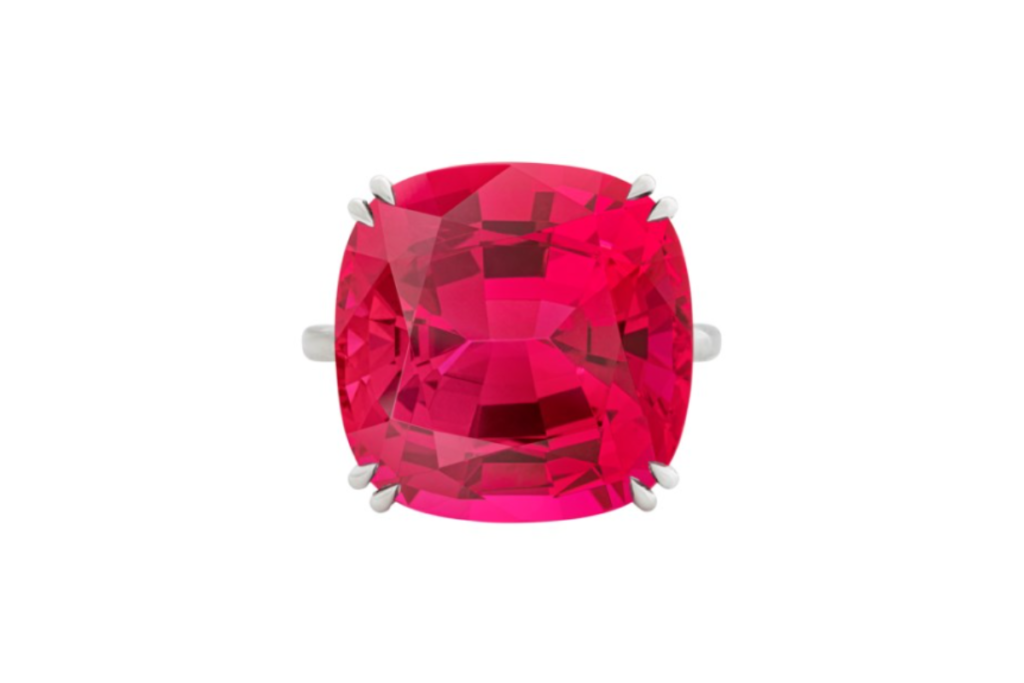
Which Mahenge color holds the crown?
The most valued, revered, and fought-over tone is:
Pure, vivid, neon hot pink with minimal modifiers.
The kind of color that feels alive.
The kind that makes your pulse rise.
The kind that, in good light, almost seems to hum.
Right behind it is:
Neon pink-red — fiery, electric, deeply charismatic.
These are the stones that end up in safe-deposit boxes, in heirloom settings, in museum considerations. These are the stones that dealers call “once in a decade.”
Magenta material has its own following, especially when cut well, but it’s the hot pink–neon range that commands the emotional and market throne.
Where Mahenge sits in modern jewelry
When I design with Mahenge, I think in terms of contrast and clarity. The gem is already a statement. It doesn’t need noise. It needs framing.
Platinum sets it on fire — clean, cold, architectural.
Rose gold warms it — softens the flame, turns it into velvet.
Yellow gold creates a dialogue — heat meeting heat.
I’ve set Mahenge stones for clients who wanted talismans, engagement rings, anniversary pieces. Every time, they said the same thing when they saw the finished jewel: “It feels alive.”
That’s the magic of this material. You don’t just wear it. You carry a piece of volcanic history, crystallized into color.
The future — and my quiet conviction
If you ask me where Mahenge spinel will stand in ten or twenty years, I can answer in one sentence:
It will be considered one of the defining gemstones of our time.
Not because of hype. Not because of marketing. But because quality, rarity, and authenticity never fall out of relevance.
The market is maturing. Collectors are becoming more educated, more intentional, more attuned to untreated gems with strong color signatures. Mahenge fits directly into this new landscape.
When I look at a fine Mahenge stone today, I feel the same spark I felt years ago in that dim office. A reminder that beauty can appear without warning, blaze for a moment, and then retreat into history — leaving only the stones behind as evidence.
That’s the story of Mahenge.
A fire that burned once.
A color that refuses to fade.
A gem that teaches us that rarity isn’t always quiet — sometimes it sings.
And perhaps that’s why I return to it again and again: because jewelry, at its best, doesn’t just sit on the skin. It reminds us of the vividness we carry inside.