The Many Personalities of Tourmaline
On origin, treatment, rarity, and the art of choosing a gem that speaks back
Tourmaline has always felt close to me. Not just because it is my birthstone, but because it mirrors the way I experience color and emotion—never fixed, never singular. It is one of my favorite gemstones for that reason alone. Tourmaline doesn’t ask you to choose one identity. It allows many, at once.
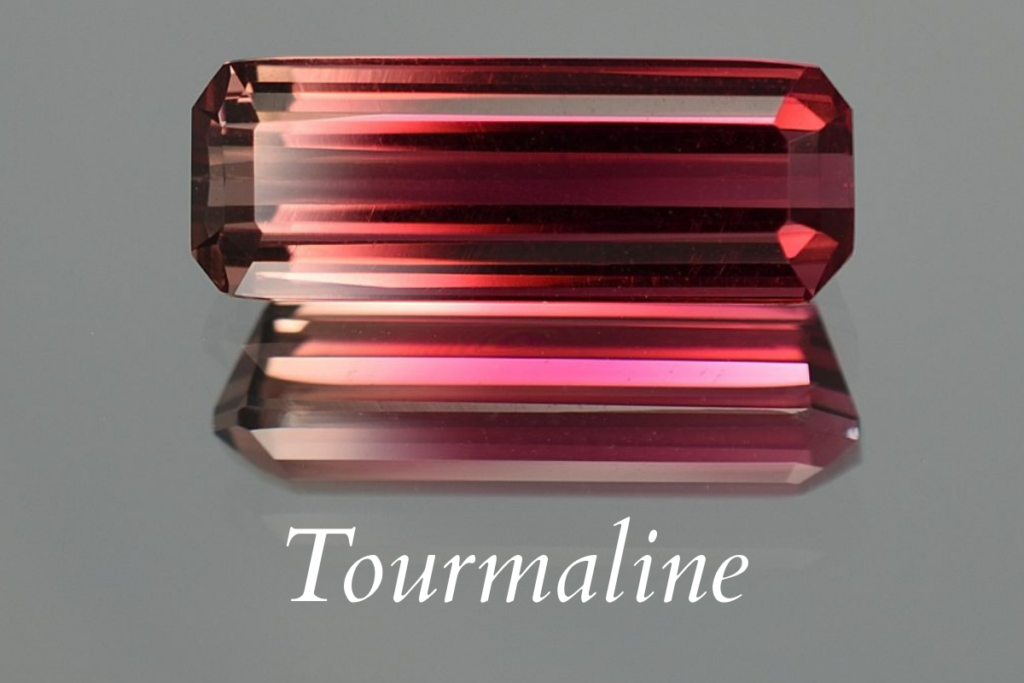
When I hold a fine tourmaline, what moves me is the hue—or more precisely, the way hue behaves. Color shifts gently as the stone turns in the light. Green leans into blue, blue softens, deepens, then returns again. Nothing abrupt. Nothing staged. In elongated step cuts especially, this movement becomes almost meditative. The long lines slow the eye, giving space for the bi-color to unfold naturally, layer by layer. That cut reveals honesty. It shows the stone as it is.
What I love most is the strength of tourmaline’s color. Not aggressive, not trying to impress—but grounded. The hue has weight. Presence. It stays with you. And perhaps that is why tourmaline feels so personal to me.
That, to me, is tourmaline’s real nature
Tourmaline has always lived slightly outside the rigid hierarchies of the gem world. It doesn’t behave like diamond. It doesn’t obey the singularity of ruby or sapphire. It exists in plural. In gradients. In contradictions. And perhaps that is why, for those who take the time to understand it, tourmaline becomes not just a purchase—but a relationship.

Where Tourmaline Begins: Stones Shaped by Place
Tourmaline forms in some of the most geologically complex environments on earth. Pegmatites—those slow-cooled, mineral-rich veins that allow crystals the time and space to grow with personality—are its birthplace. This alone explains much of its variety. Tourmaline grows patiently. It absorbs its surroundings. It remembers where it came from.
Brazil remains the most historically significant source. From Minas Gerais come greens with depth, pinks that feel warm rather than sweet, and the legendary Paraíba-type tourmalines whose copper content produces a glow that seems almost electrical. Mozambique and Nigeria now contribute important copper-bearing material as well, though each origin carries subtle differences in tone and structure that the trained eye learns to read.
Afghanistan and Pakistan offer elegant greens and bi-colors, often with long, architectural crystal shapes. Madagascar brings an astonishing spectrum—teals, yellows, smoky violets—often softer in tone but rich in nuance. Nigeria’s stones tend to show strong saturation and clarity, while Sri Lanka produces lighter, refined colors that feel almost watercolor-like.
Origin matters, but not in a simplistic way. It is not a label to chase blindly. It is context. It explains why a green feels cool instead of warm, why one pink leans toward coral while another drifts into violet. In tourmaline, geography writes mood.
Where Color Refuses to Stand Still
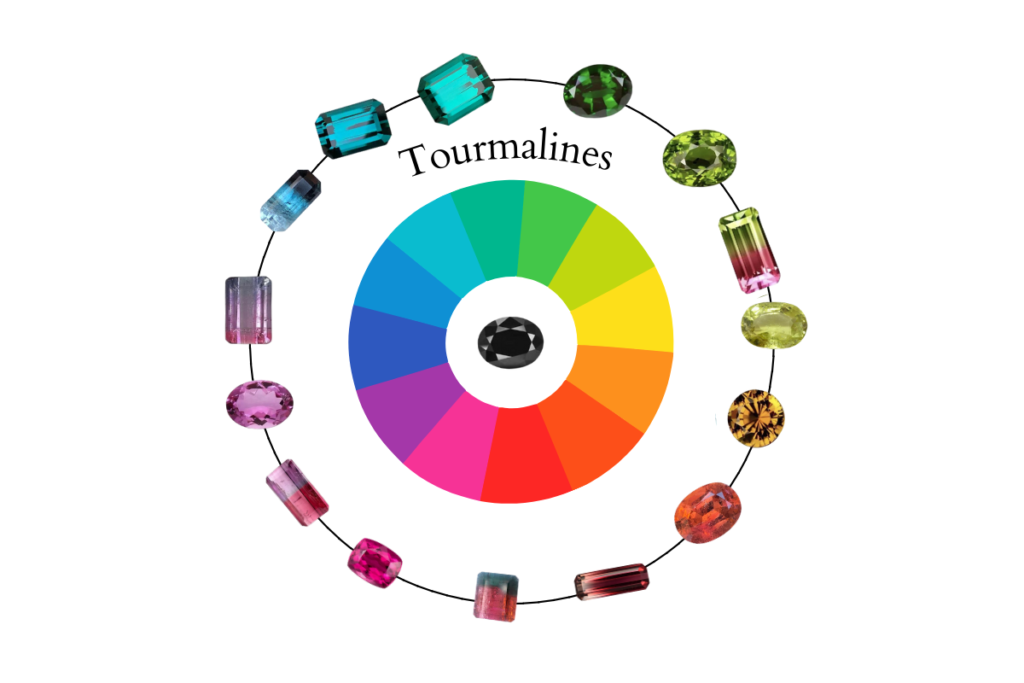
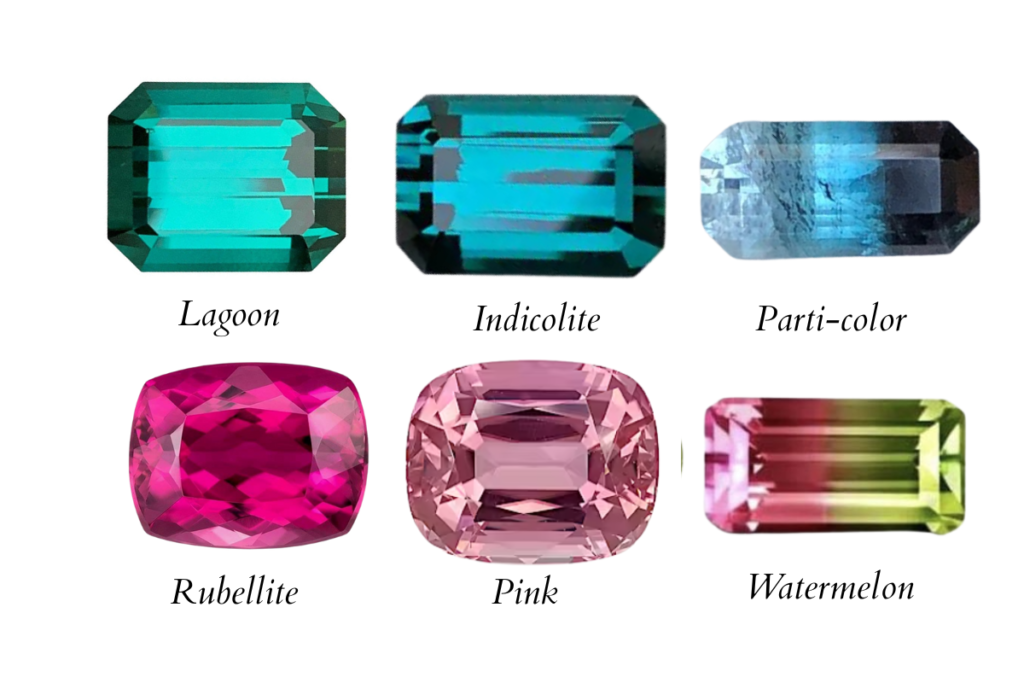
What truly sets tourmaline apart is the way it carries color—not as a fixed decision, but as a continuous movement. Few gemstones offer such an expansive palette. Greens can feel cool and mineral, or deep and forested. Blues shift between sea, sky, and something darker, almost inky. Pinks range from soft, skin-warm tones to saturated hues with quiet intensity, while reds tend to feel grounded, never sharp. And then there are the shades that live in between, the ones that resist precise naming—teals, olive greens, smoky violets, muted honey tones.
Tourmaline does not separate its colors cleanly. It allows them to meet. In bi-color and parti-color stones, hues slide into one another without clear borders, as if the stone decided to keep the entire journey rather than choose a single destination. This is where cutting becomes essential. Elongated step cuts, in particular, give color room to breathe. The long, architectural lines slow the eye and guide it through the stone, letting each hue reveal itself gradually. Nothing feels rushed. Nothing is hidden.
What I find most compelling is the strength behind these colors. Tourmaline’s hues are not loud or performative. They have weight. They hold their ground in natural light and remain present even in shadow. That quiet confidence is rare. It’s the kind of color that doesn’t fade from memory once you’ve seen it.
The Question of Heat: Why Tourmaline Is Treated
Heat treatment in tourmaline is common, long accepted, and—when disclosed—ethically unproblematic. It is typically applied to remove brownish or gray modifiers and to stabilize or clarify color. Unlike more invasive treatments, heating works with what is already present in the stone. It does not invent color. It refines it.
Most green, pink, and red tourmalines on the market have been gently heated at relatively low temperatures. The process is stable and permanent. Copper-bearing tourmalines may also undergo heat to enhance brightness, though their glow comes from chemistry, not treatment.
Untreated stones do exist. They are rarer, and when accompanied by laboratory confirmation, they often command a premium. But I caution buyers against fetishizing “untreated” as an absolute virtue. A beautifully colored, well-cut heated tourmaline will always be more desirable than a dull untreated one. Value follows presence, not ideology.
What matters is transparency. Any seller unwilling to discuss treatment plainly is not a seller worth trusting.

How Treatment Affects Value
Treatment in itself does not destroy value. Undisclosed or unstable treatment does.
In fine commercial and high jewelry contexts, heated tourmaline is fully accepted. Prices reflect quality—color, clarity, cut, size—before treatment status. However, in collector-grade stones, especially rare hues or large sizes, untreated status can add a meaningful premium when verified by a respected laboratory such as GIA or SSEF.
Copper-bearing tourmalines follow a different logic. Their value is driven by color intensity and glow first, origin second, and treatment status third. A weak untreated Paraíba-type stone will never outperform a vivid heated one.
In short: treatment is a factor. It is never the whole story.
Rarity Is Not What You Think
Tourmaline is often described as abundant. This is misleading.
What is abundant is tourmaline of average quality. Fine tourmaline—stones with balanced tone, strong saturation, good clarity, and intelligent cutting—is genuinely scarce. Add size to the equation, and scarcity becomes real.
Certain hues are particularly rare. Pure reds without brown or purple modifiers. True teal tones that sit precisely between blue and green. Natural bi-colors with clean, intentional transitions rather than muddy blending. Large rubellites that retain saturation in daylight. And of course, copper-bearing blues and greens with that unmistakable internal light.
Rarity in tourmaline is quiet. It doesn’t announce itself through a single famous mine or a fixed price per carat. It reveals itself slowly, through absence. Through the fact that you can search for months and not find what you are looking for.
Choosing Well: What Actually Matters When Buying
When I evaluate a tourmaline, I start with color—but not in isolation. I look for balance. Is the tone too dark to live in natural light? Too pale to hold presence once set? Does the color sit on the surface, or does it feel layered?
Then I move the stone. Slowly. Windowing is common in tourmaline due to its refractive properties, but excessive transparency at the center is a flaw, not a quirk. Extinction—those dead, black areas—kills emotion. A well-cut tourmaline holds color as it moves. It breathes.
Clarity comes next. Tourmaline is forgiving. Fine needles or growth features are normal. What matters is whether inclusions disrupt the face-up life of the stone. Cracks that reach the surface, or cloudy zones that flatten color, are problems.
Cut is often underestimated. Many tourmalines are cut to save weight, not to honor the material. Recutting is common among collectors for a reason. A modest stone, intelligently recut, can transform completely.
And finally, size. Tourmaline shows its personality beautifully between two and five carats. Above that, prices rise quickly—but so does presence. Large, fine stones are not common. When they appear, they tend not to linger.
Value and Price: Understanding the Spectrum
Tourmaline prices span a wide range, reflecting its diversity. Commercial material trades at accessible levels, suitable for everyday jewelry. Fine quality stones—strong color, good clarity, thoughtful cut—occupy a stable middle ground favored by designers and informed buyers.
Top gem-quality tourmalines, especially in rare hues or larger sizes, sit firmly in the fine jewelry and collector space. Copper-bearing varieties occupy their own category, with prices driven by color intensity and visual impact rather than size alone.
What I find encouraging is this: tourmaline remains undervalued relative to its complexity. As collectors move away from uniformity and toward stones with character, tourmaline’s value proposition strengthens. It rewards knowledge. It punishes shortcuts.

A Stone That Refuses Uniformity: How Tourmaline Is Used in Jewelry
Tourmaline lends itself to creative freedom. Designers love it because it doesn’t insist on symmetry or sameness. It works beautifully in solitaires when the stone is strong enough to stand alone. It becomes extraordinary in compositions—gradients, pairs, mismatched earrings, pieces that play with variation rather than hiding it.
Bi-colors are often left elongated, following the natural growth of the crystal. Greens and teals find harmony in architectural settings. Pinks and rubellites soften structured designs, bringing warmth without sweetness. Lighter tones suit day pieces; deeper colors belong to evening, to skin, to shadow.
Tourmaline does not dominate. It collaborates.
Sourcing 101: Buying with Intelligence and Respect
Tourmaline mining is often small-scale. Family operations. Remote regions. Supply is inconsistent, and ethical sourcing requires attention rather than slogans. Ask questions. About origin. About treatment. About how the stone changed hands.
Buy from people who specialize. Who can explain why a stone looks the way it does. Who are comfortable saying, “This is not the best—but this is why.”
A good tourmaline seller is a guide, not a persuader.
Why Tourmaline Endures
Tourmaline teaches patience. It asks you to look twice. To change the angle. To accept that beauty can be layered, imperfect, unresolved.
In a world obsessed with clarity and certainty, tourmaline offers something else—a spectrum. A reminder that value does not always come from precision, but from depth.
Jewelry, at its best, does not simplify us. It reflects us. And tourmaline, with all its colors and contradictions, does exactly that.